10 Self-building tips to get started
At Welsh Oak Frame, we understand that starting a new project, whether that is building an extension, garden room or even a new home, can be daunting. Carrying out in-depth research beforehand can help things feel less overwhelming. We’ve put together 10 Self-building tips that every self-builder should know before starting your project.
1. Know what resources are out there
Firstly, as a self-builder, it’s important to know that you are not on your own with around 13,000 self-build projects happening every year on average. With that number of builds happening there’s no wonder that there is a treasure trove of materials just waiting to give you advice and guidance. From self-build magazines like Homebuilding & Renovatingand Build It, to websites and blogs and even social media, it’s all there at a touch of a button waiting to help. Additionally, if you fancy a more in person fact finding mission then you can head to The National Self Build & Renovation Centre, which have a well of information and seminars.
2. Choose your construction method early.
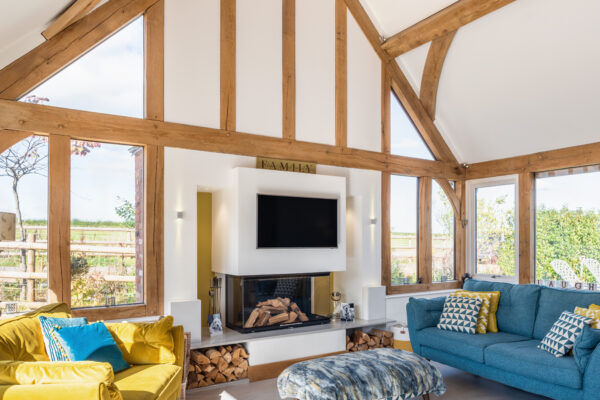
Choosing a construction system is one of the key decisions made when building a new home or extending an existing property. While brick and block maybe the industry standard for most homes, a lot more self-builders are turning to different methods. Timber framed systems such as oak are a huge benefit to any build as they tend to be easier to construct, take less time to erect, are more energy efficient and some materials like oak can last for hundreds of years. It’s important that you choose your construction method early as this can effect the overall design.
3. Research the trades – get the right team on board.
We’ve all heard horror stories about people we know being ripped off by builders, and while that can happen not all builders are out to steal your money. There are a few simple things you can do to make sure you find the builder whose right for you; talk to a builder’s previous clients and see the quality of their work.
4. Bigger isn’t always better.
While trying to maximise space and getting the most out of your money is important. The bigger the house doesn’t necessarily mean it’s better for your plot of land. When designing your future build it’s important to take into consideration the build in relation to the garden, as this could have an impact on any resale value in the future.
5. Check that a plot is suitable for building.
Not all building plots appear to be what they seem, tread carefully to minimise the risk of making a costly mistake. The type of plot you purchase can have an impact on whether you will be able to build. Plots with no planning and that are outside towns or villages is likely to be outside the council’s development zone and is often classified for agricultural use only, it’s also best to research before purchasing.
6. How will you finance your project?
Finances can always be a sticky subject but there are so many ways that you can finance your self-build project, like:
Selling your current property and using that to finance the build.
Self-build mortgages.
Financial help through help to build government schemes. In Wales, Scotland and England there are schemes that can help you towards your build. Each scheme does vary but it is a way of getting on the self-build market.
There are various different requirements but they are worth investigating if you are serious about a self-build.
7. You’ll pay more to go green.
Energy efficient homes are becoming more and more popular, but the cost to build them is still pretty steep. The costs that you have to put upfront are usually more than standard builds. They usually include specialised materials and the labour to install them. However, while you may pay more in the initial build stages you may save more money in the long term. Homes with high levels of insulation and airtightness cost less to run.
8. Self- building isn’t totally VAT free.
This is true. There are elements of a new build that are VAT free like all labour. However, there are elements of the build which you can’t claim the VAT back from. Things like design services and other professional services. You can use a VAT Notice 431 form to claim any VAT back, although this doesn’t include extension builds.
9. Project manage yourself or choose the right build route.
When you start a self-build, you don’t always need someone to project manage for you. If you have the time to dedicate to the build then project managing yourself is a great way of saving money.
10. Sometimes renovating isn’t always best.
At Welsh Oak Frame we often see a lot of our clients knocking down old buildings to rebuild. Sometimes rebuilding is cheaper and easier than doing up what was already there. While planning might be more difficult and take longer, in the long run it might save you a lot of money. New builds are zero rated VAT. If you are unsure whether to knock down, rebuild or renovate have a chat with local planners, or building contractors. It’s always best to seek advice if you are unsure.