
Steps to building a Welsh Oak frame house
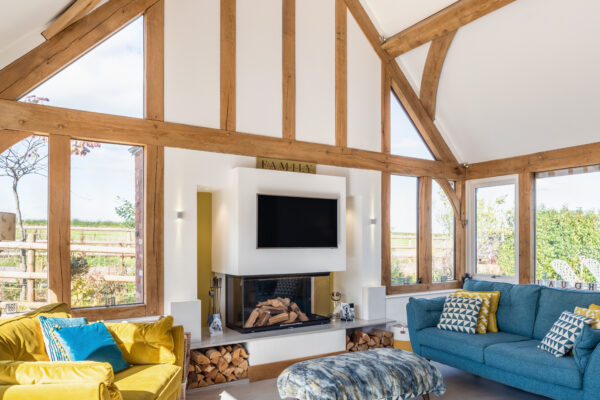
Choosing to build an oak frame house is an opportunity to live in a sustainable, long-lasting, energy efficient home while also enjoying a timeless aesthetic with its own unique character
What’s an oak frame house?
There are various ways to construct a house and oak is one of them. Essentially, the oak frame provides the structural support, instead of using brick and block, and can form the shell of the roof structure too. The frame is wrapped in highly insulated panels to form a warm and often airtight shell. This can be done with structural insulated panels (SIPs) or with an encapsulation system. The oak is visible on the inside of the house and oak details can be added to the exterior too. There’s also the option to use infill panels between the frame to keep the oak exposed and, of course, the opportunity to have large amounts of glazing.
What are the different oak frame styles?
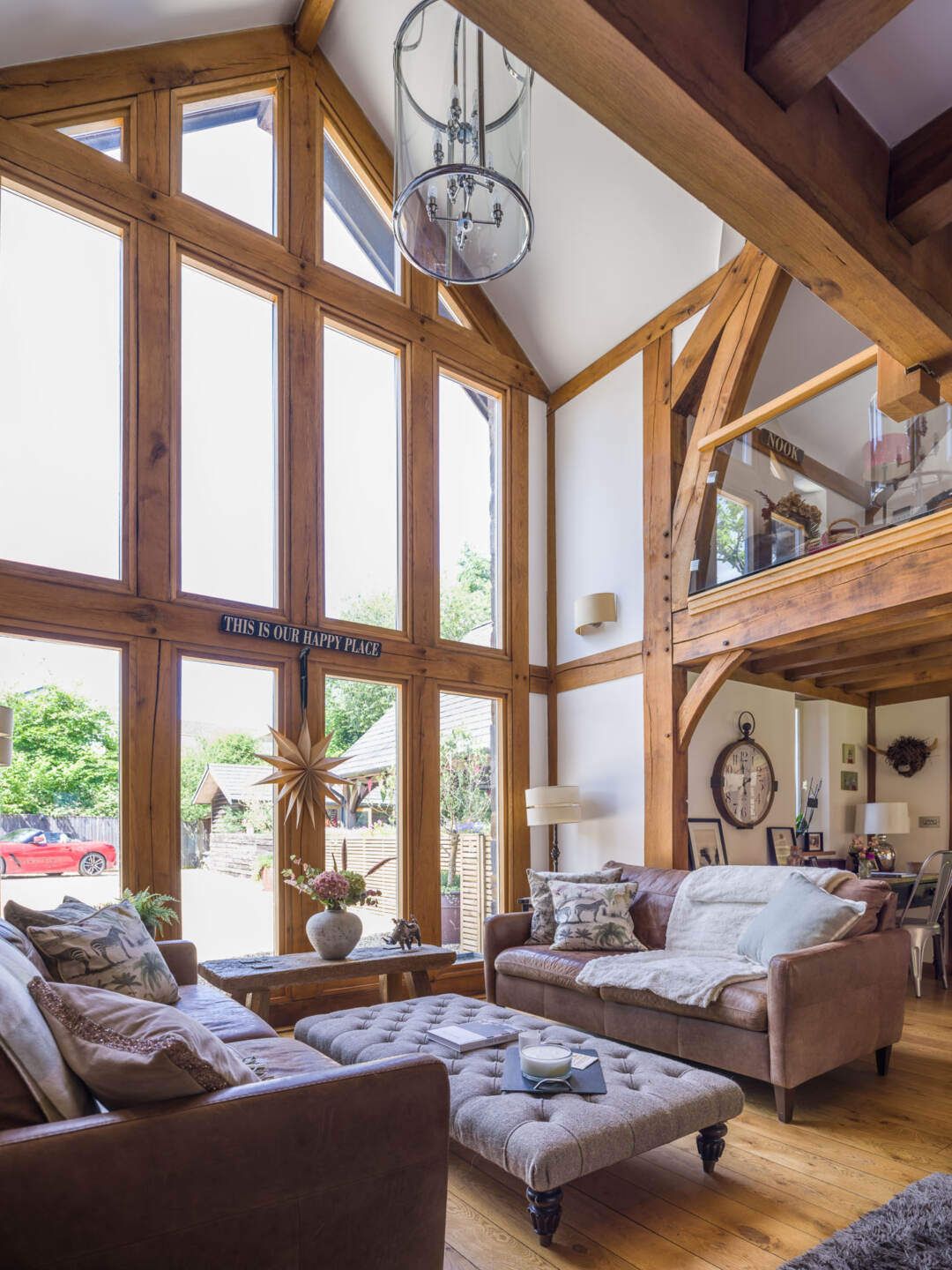
An oak frame house can look traditional or contemporary as the frame can be clad in wood, brick, stone or tiles. The style can echo a converted barn, a cottage, a farmhouse – there are no design limits. A ceiling with all the beams and rafters on show leans towards a more traditional look, while a post and beam structure that hides some of the frame, has a cleaner aesthetic. A double height cathedral ceiling with a glass gable end is hugely popular – you could add a mezzanine or walkway too. The arched A-frame can have a simple squared off look or curves for a handcrafted finish. To find out which oak features and details resonate with you, we suggest looking at our case studies and gallery and creating a mood board.

Design process
We have an in-house design team, so you won’t need an independent architect, which makes the design process more streamlined and cost-effective. Our designers have in-depth knowledge of oak frame building as well as the design eye for creating beautiful bespoke homes. One of the first steps is for us to arrange a meeting with you to understand your goals with the aim to bring your vision to life. We produce a 3D walkthrough so you can see exactly where the oak will go and how your new home will look. We can handle your planning application, too.
If your preferred route is to use an architect, then choose a professional with experience of oak frame design. Be aware that once drawings have been approved by planning, they will still need to go through an additional design phase with us. This is when we do the structural engineering and oak detailing for building regulations, which also accounts for the natural shrinkage that occurs as the oak frame dries out and strengthens.
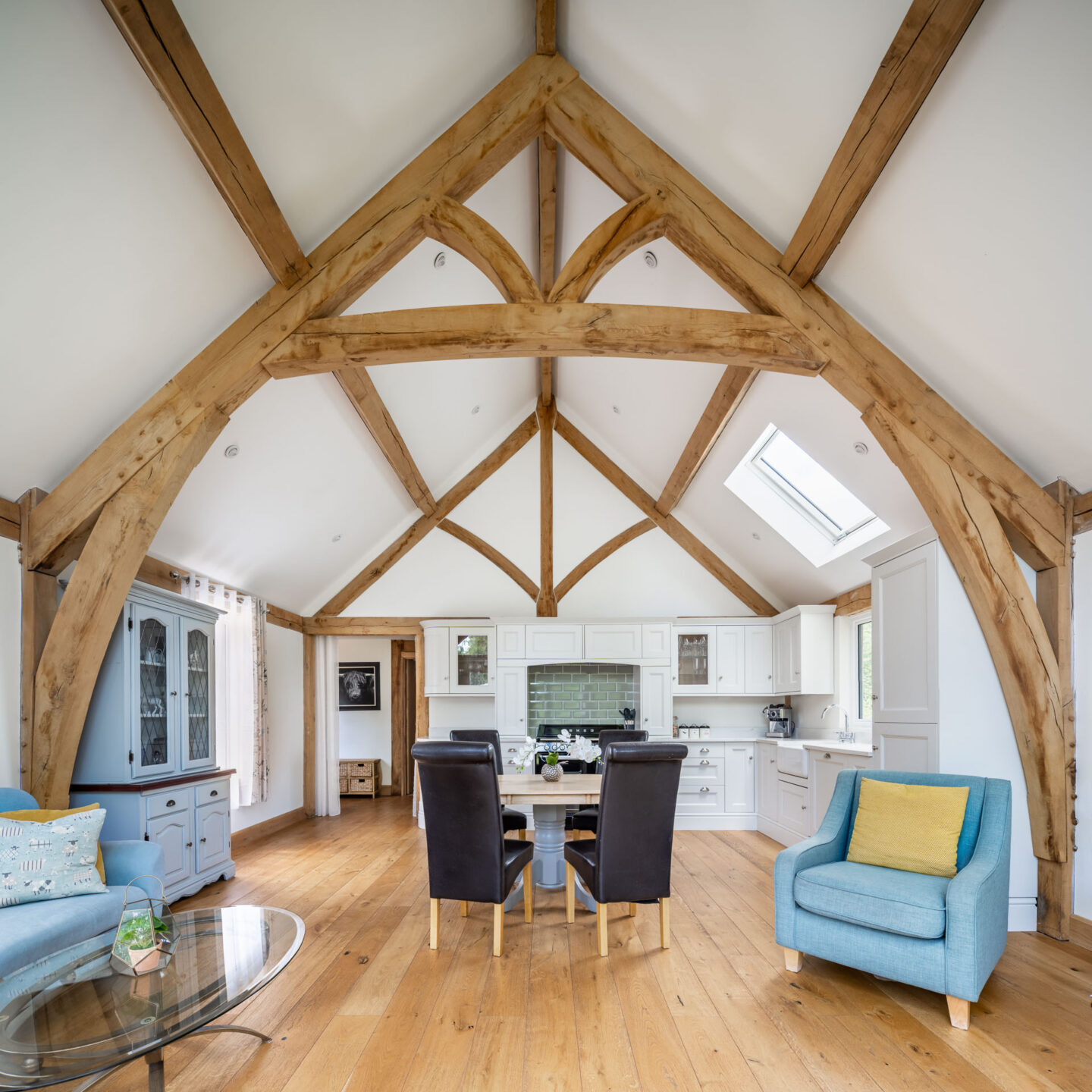
Whether we’re designing from scratch or working with an approved design, we strive to add value. In Sarah and Mark Graham’s oak frame annexe they were delighted with the curve we introduced to the main A-frame in their architect design and the additional oak detailing in the bathroom and bedrooms.
Putting up the frame
The oak frame is crafted in our workshop and you’re given a delivery date. We’ll supply you with the specification needed for the base slab, which must be close to millimetre perfect. One of our team will come and inspect the slab to check it’s completely level before the frame is delivered. The individual oak timbers are numbered and labelled ready to be put together by hand, while large A-frames are craned into place. The authentic handcrafted build is achieved with traditional framing methods of mortise and tenon joints secured with wooden pegs. Depending on the size, the oak frame shell can be up and finished within five to seven days.
Oak frame aftercare
It’s perfectly normal for the oak frame to stain while it’s still open to the elements. Oxalic acid is the trick to remove the marks and usually done once the house is watertight. Some customers leave the clean interior oak alone while others use Osmo oil to enhance the grain. The exterior can be left to weather silver but to keep its original honey colour, you’ll need to oil or varnish annually. It can take a few years for the oak to fully dry out and as this happens it might make some alarming creaking and popping noises. Don’t be concerned! It’s all normal, as are the ‘shakes’, the cracks that appear as the frame dries, shrinks and strengthens to give the frame its unique character.