
Case study
“We felt oak frame holiday lets fitted in very well with our ethos, particularly as staying in an oak frame house is an experience in itself.”
Andrew Debnam and Emily Jenner built four oak frame houses to expand their holiday let business on a vineyard in Hampshire. They considered other build options but decided oak framing would give them the best outcome.
‘We named the Otium Wine Estate after the Roman concept to retreat to the countryside to reflect and reconnect with nature because this is the experience we want to give guests,’ Andrew explains. ‘We felt oak frame holiday lets fitted in very well with this ethos, particularly as staying in an oak frame house is an experience in itself.’
Andrew and Emily had been living in London and working in finance for many years when they decided to build a different life for themselves in the countryside where they could raise a family. The idea to buy a vineyard sprung from holidays travelling around France where they’d enjoyed visiting vineyards and wine tasting.
‘We thought we’d combine our desire for change and our passion for wine and buy land to plant a vineyard,’ Andrew explains. ‘We looked at where other businesses had been successful making English wine, which was also relatively close to London to attract the London market, and identified Sussex, Kent and Hampshire.’
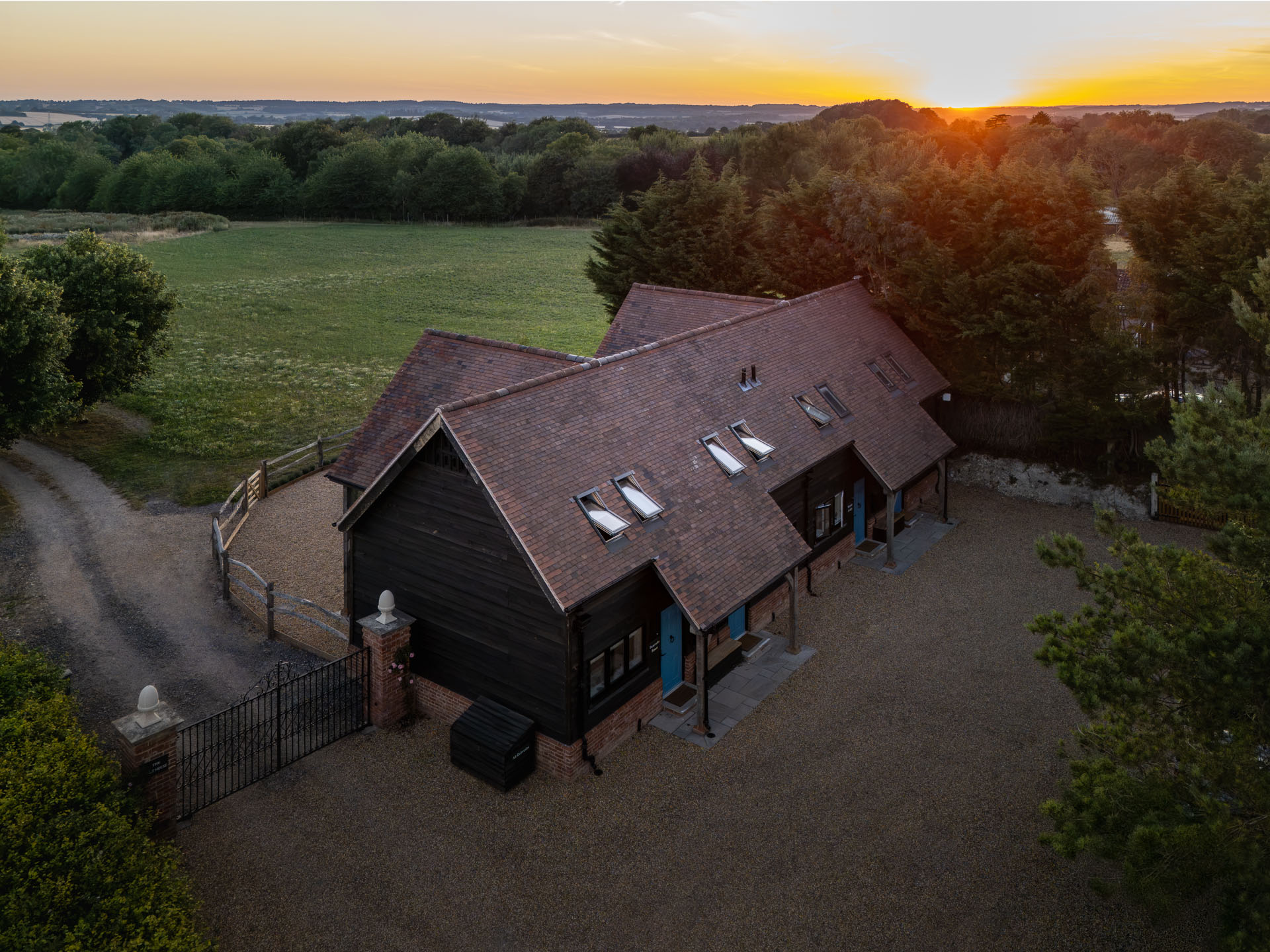
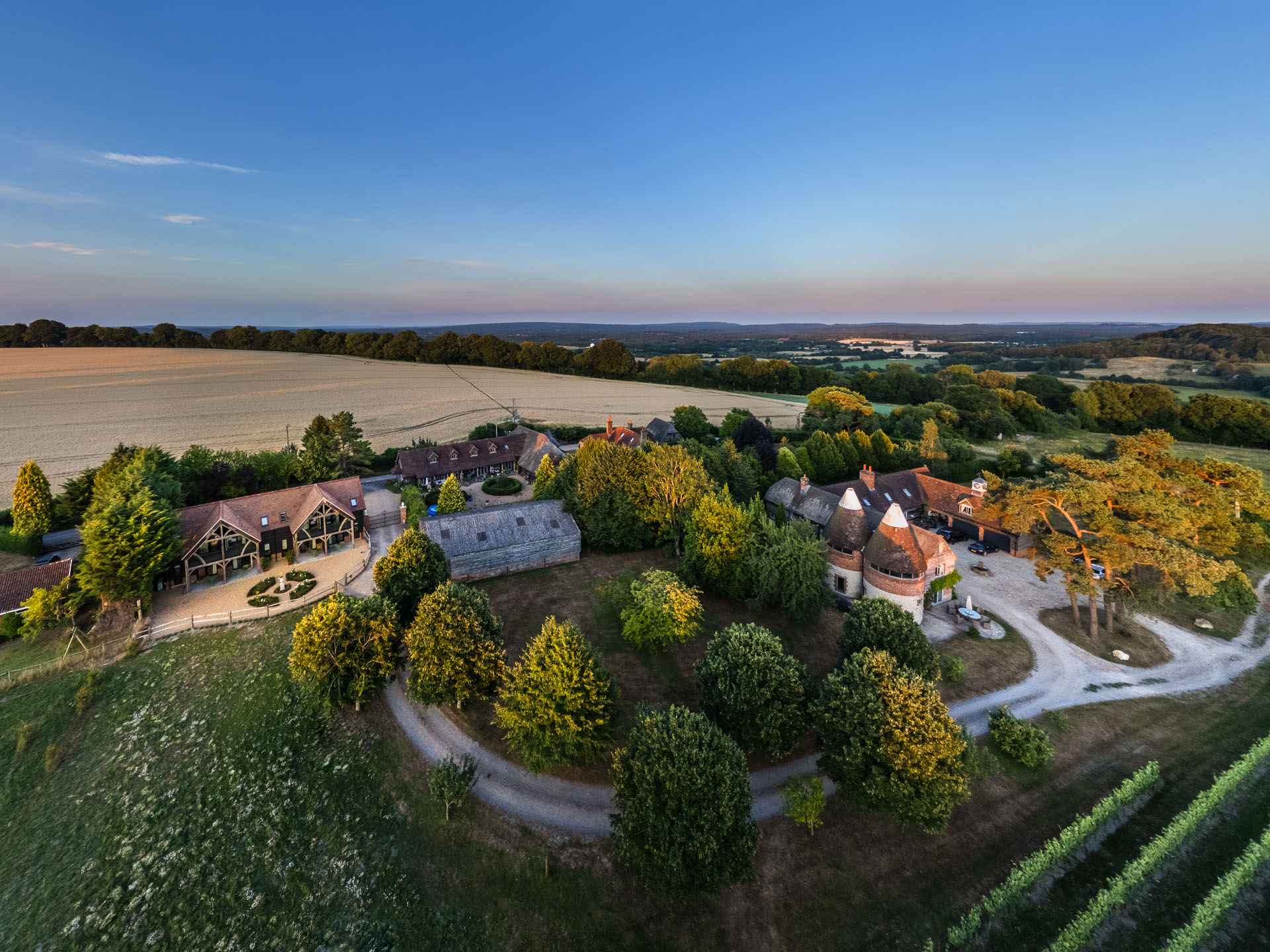
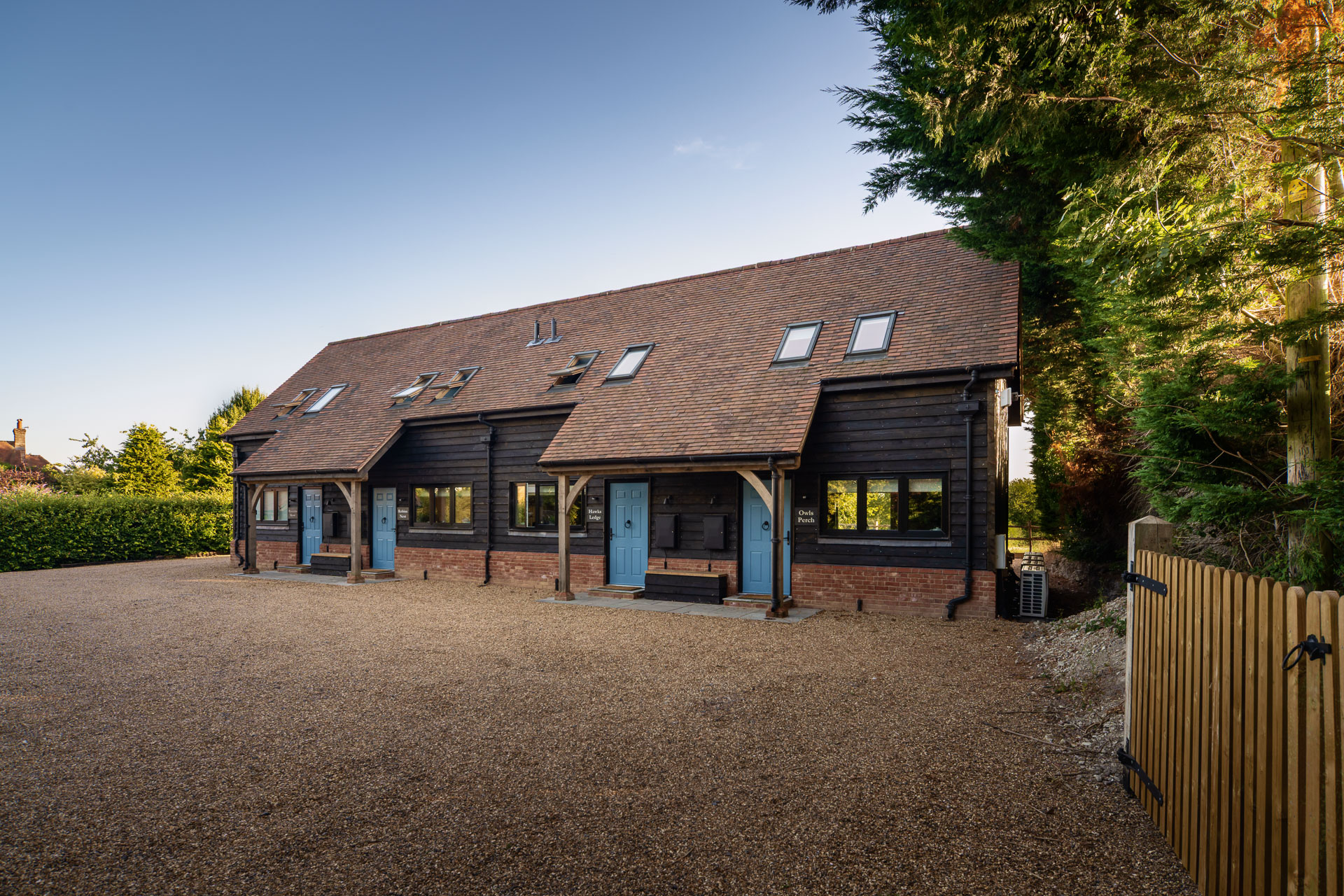
Quite quickly, the couple came across an 80-acre farm estate near Alton in Hampshire. Their home is an oast house attached to a barn, which the previous owner had extended into a horseshoe shape around a courtyard. There’s also a pair of timber frame terraced cottages, a bungalow and stable block.
‘We didn’t plan to set-up a holiday let business, but we needed an income while we got the vineyard established,’ says Andrew. ‘It also made sense as the previous owner had already been letting the two cottages.’
Andrew and Emily added a shepherd’s hut and turned a wing of their oast house into self-contained accommodation. Then they progressed plans to build four oak framed properties. The couple identified an area on their land, which was within the logical framework of the hamlet of buildings and had connections to utilities and space for parking.
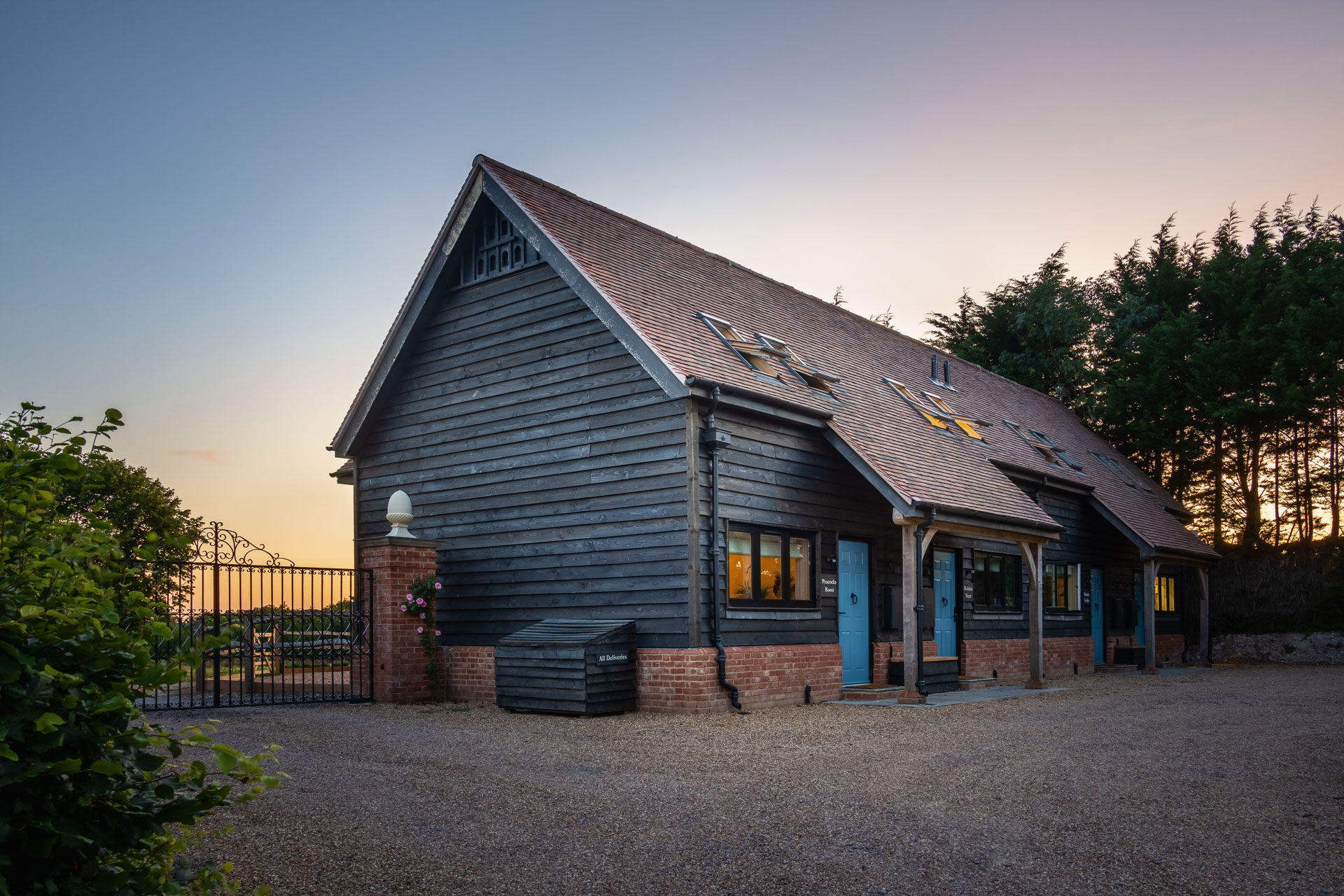
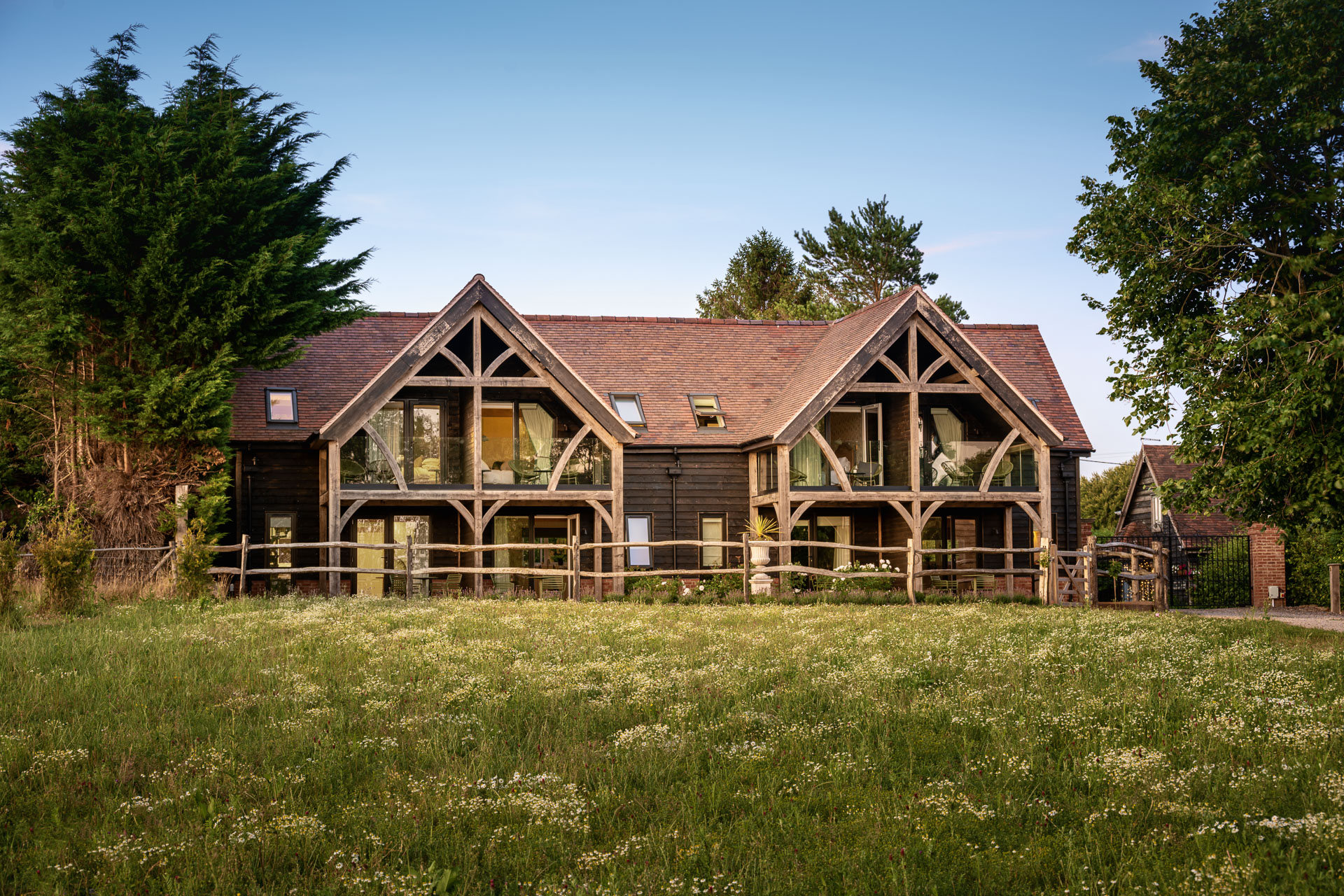
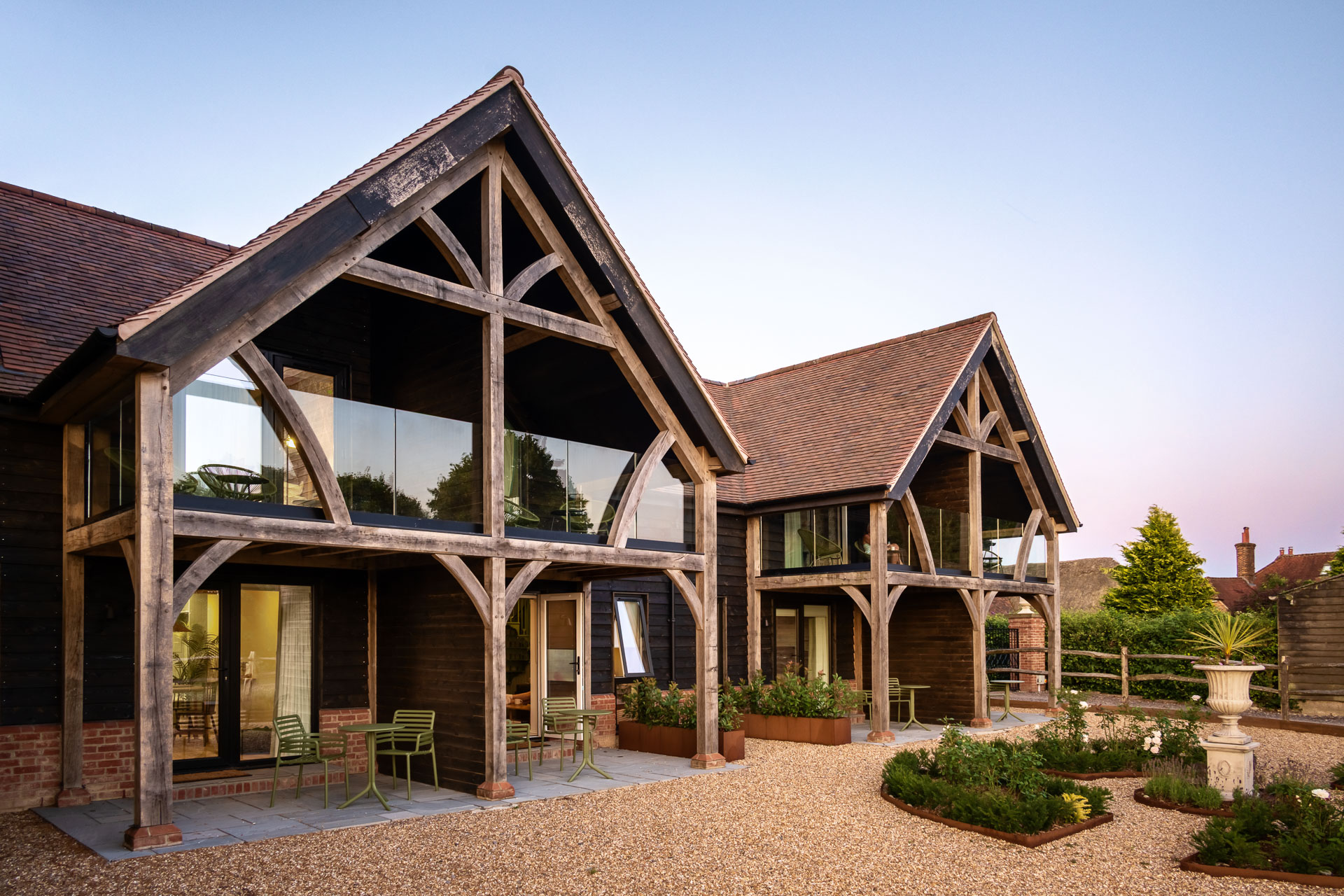
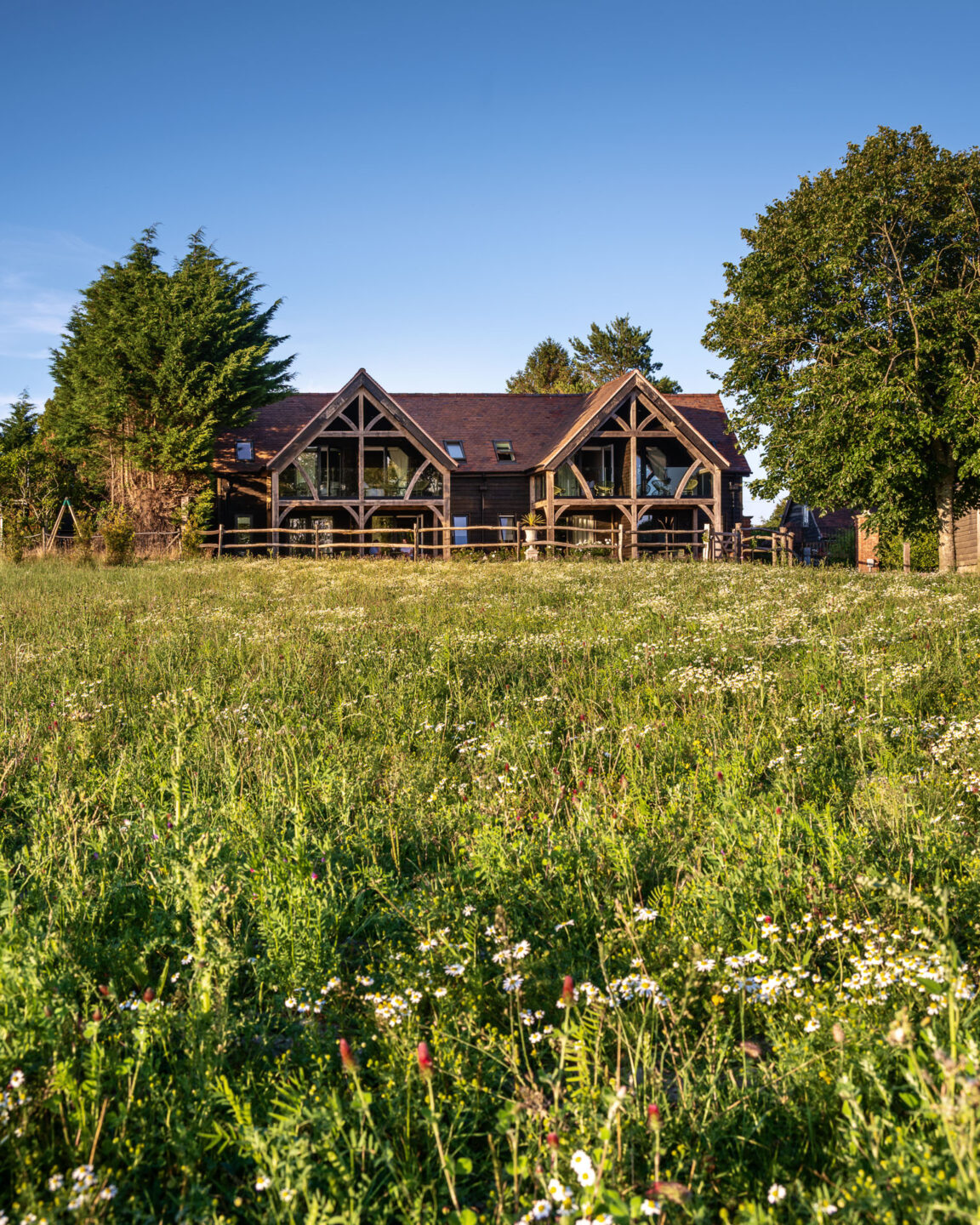
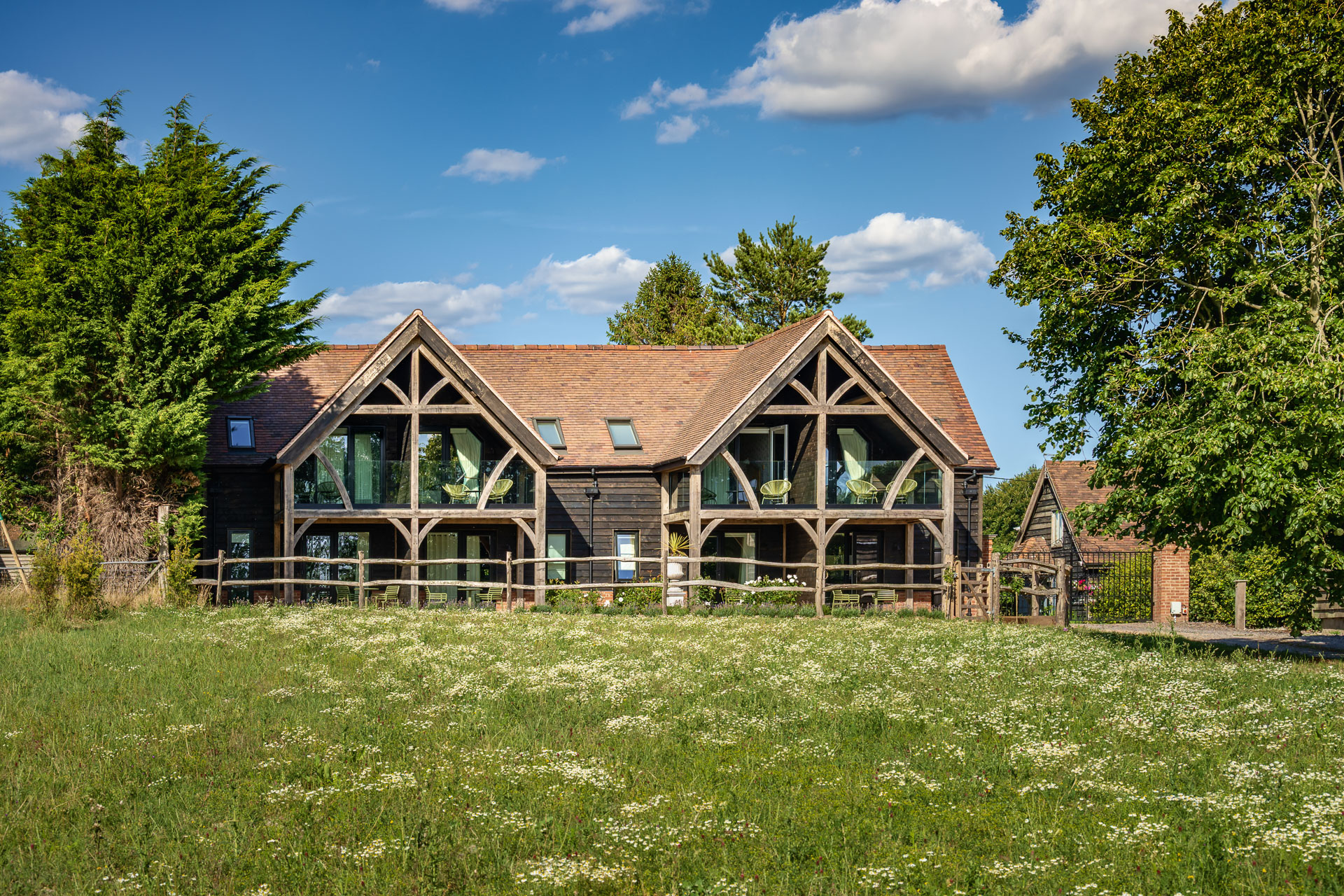
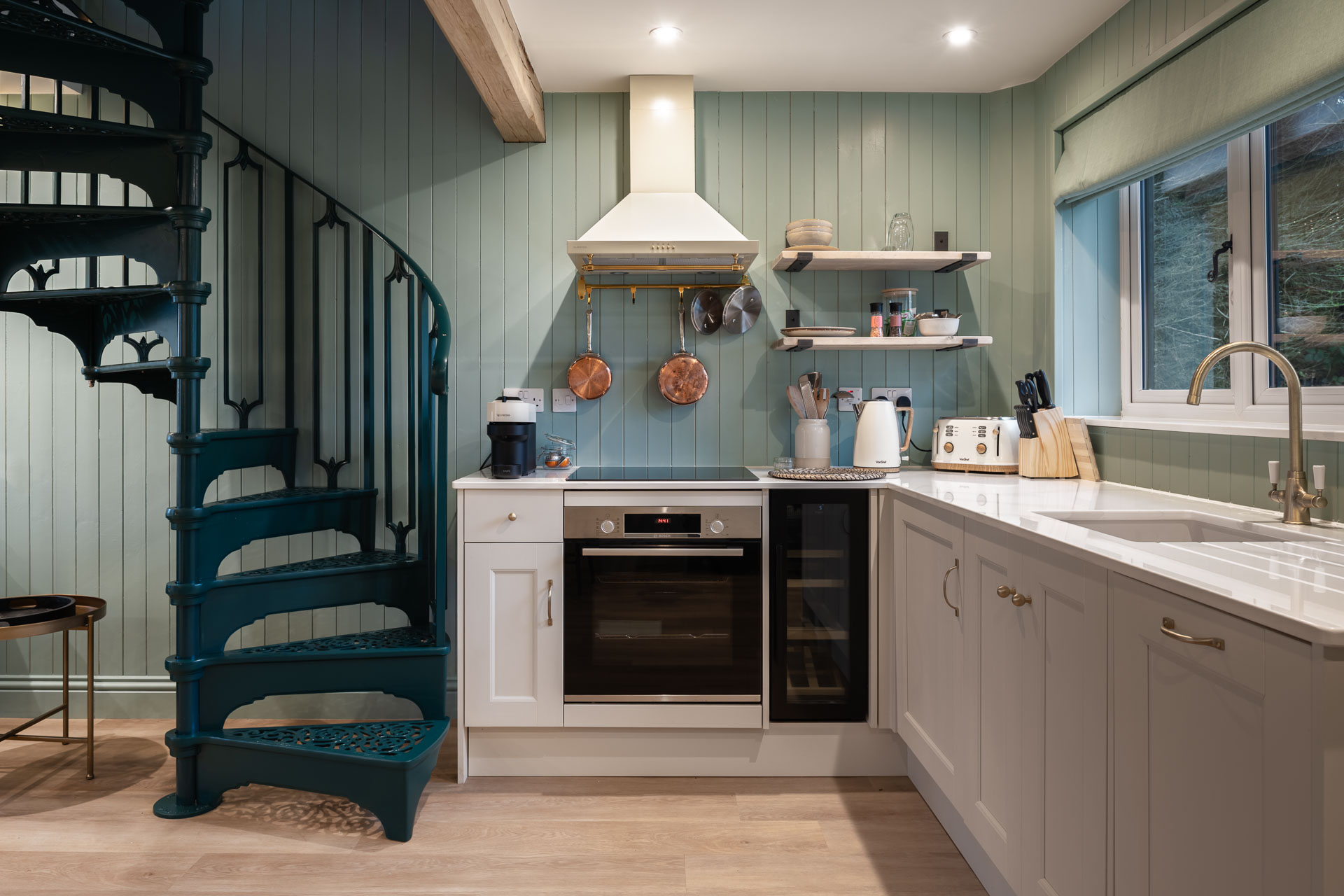
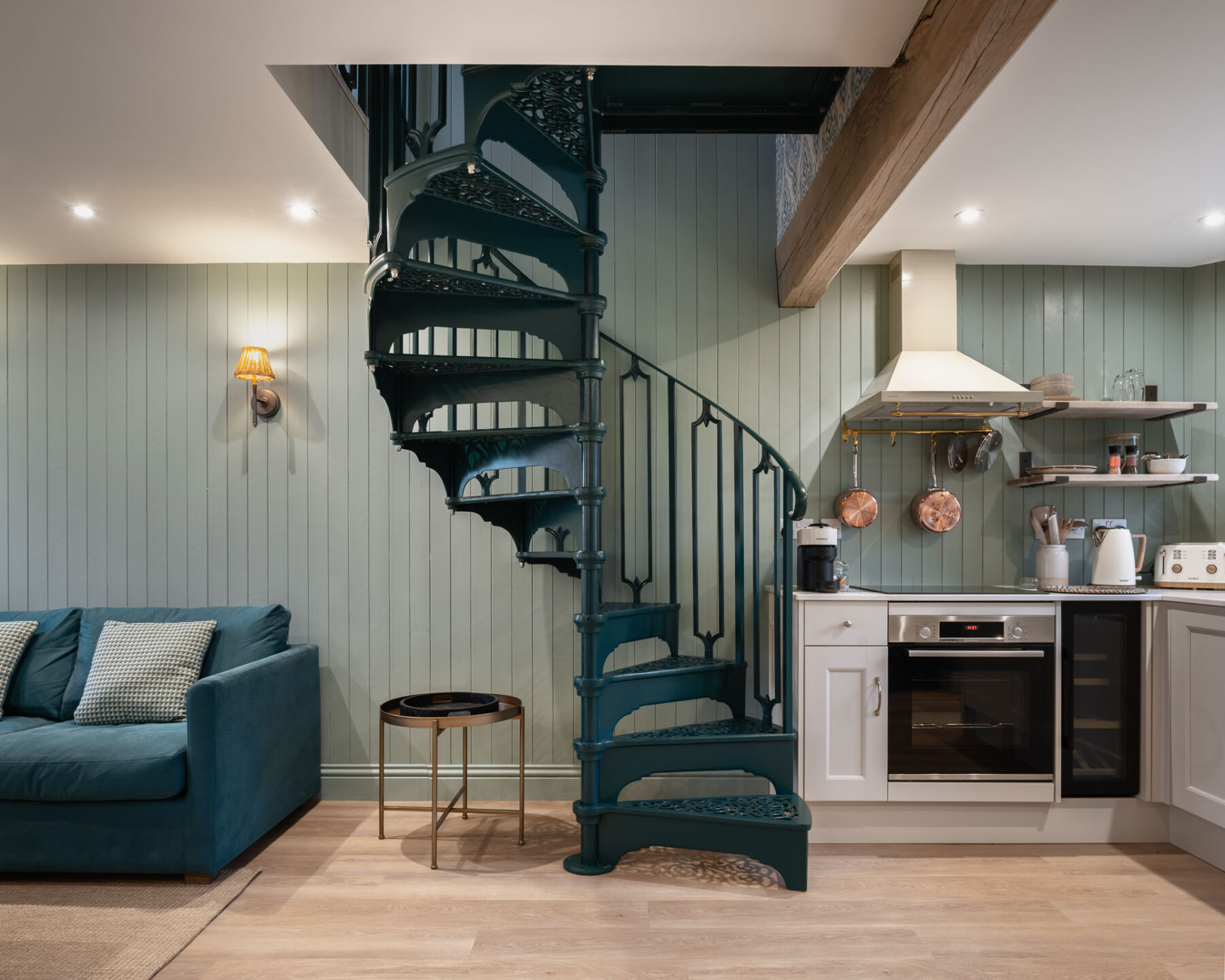
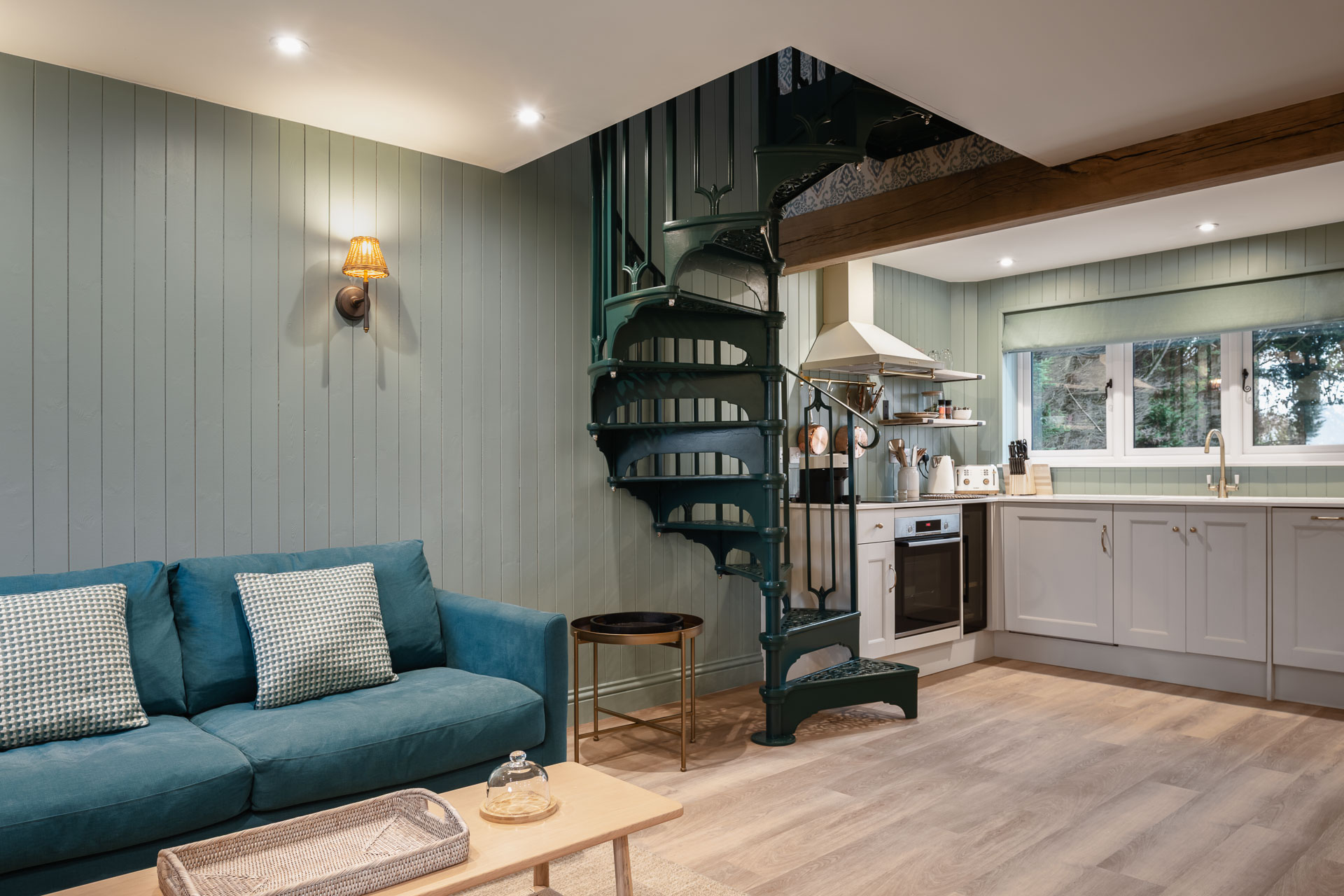
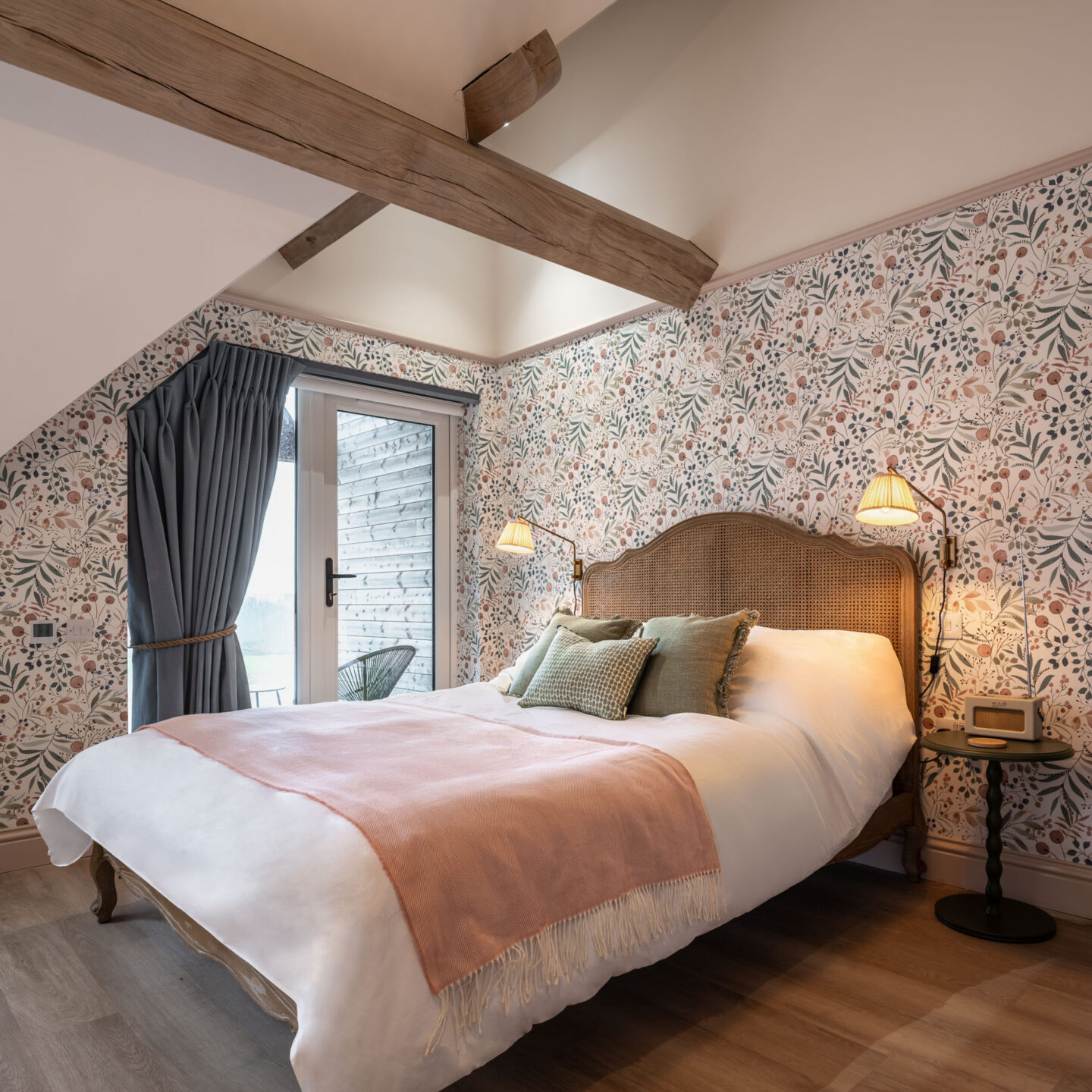
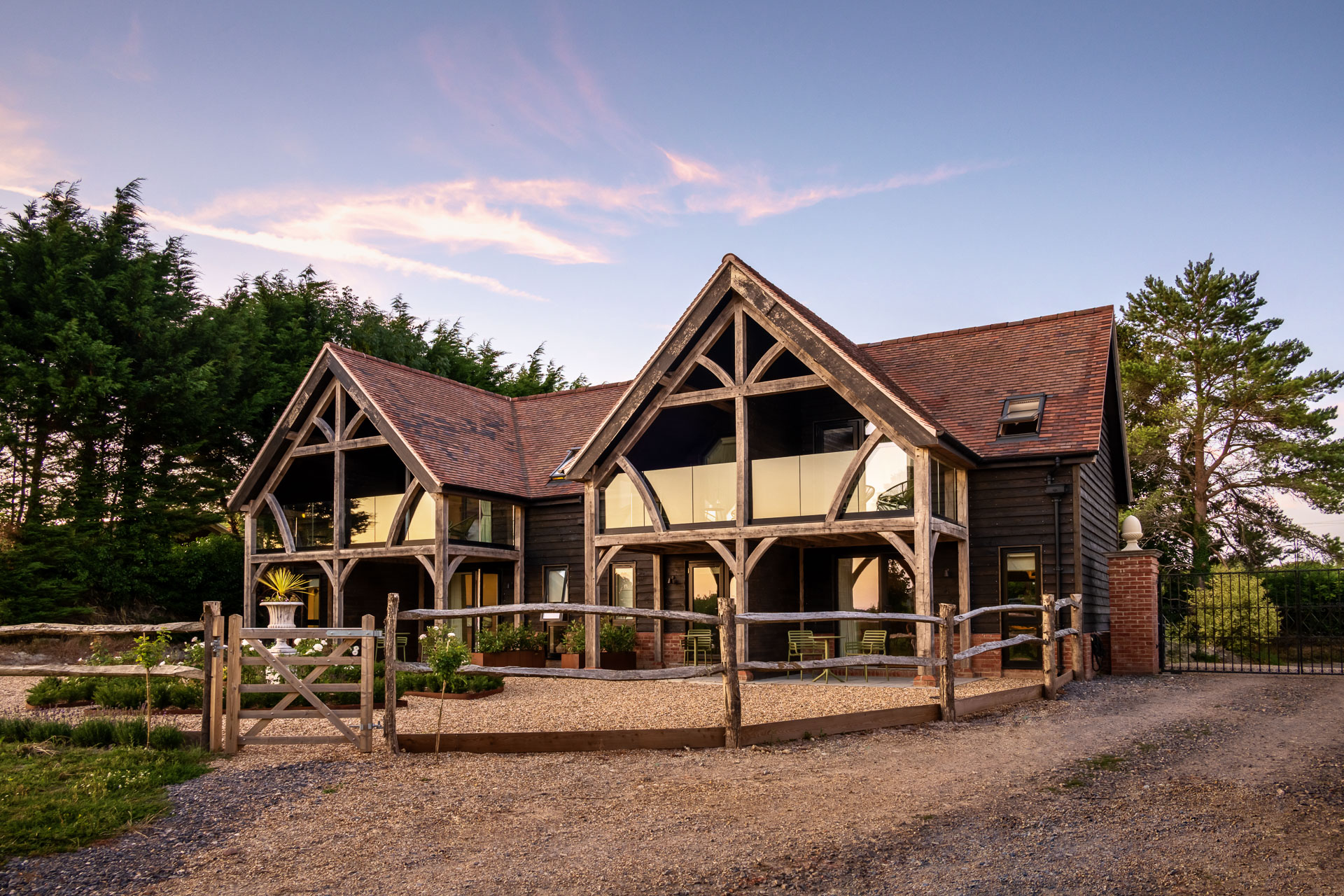
‘We wanted to offer guests a luxury retreat and for the oak frame exterior to look natural in the landscape, like one building, rather than smaller properties sandwiched together,’ Andrew explains. ‘There’s uniformity as each is two-storey with a balcony that capture stunning views of our vineyard and the countryside, yet the interiors are all different.’
Andrew and Emily searched online for oak frame companies and contacted three for quotes. They explained what they wanted to achieve and hoped they could build within their budget.
‘Two companies were quite lavish and expensive while Welsh Oak Frame showed us an off-the-shelf design with a ballpark quote to demonstrate our project was feasible,’ says Andrew. ‘They understood we had to be price conscious and we were confident they could deliver a really decent quality project, which they absolutely did.’
Andrew and Emily briefed Welsh Oak Frame’s design team, requesting four matching properties they would design uniquely inside. The oak frame building needed to fit onto the plot so each had a lovely outlook of the fields and vineyard.
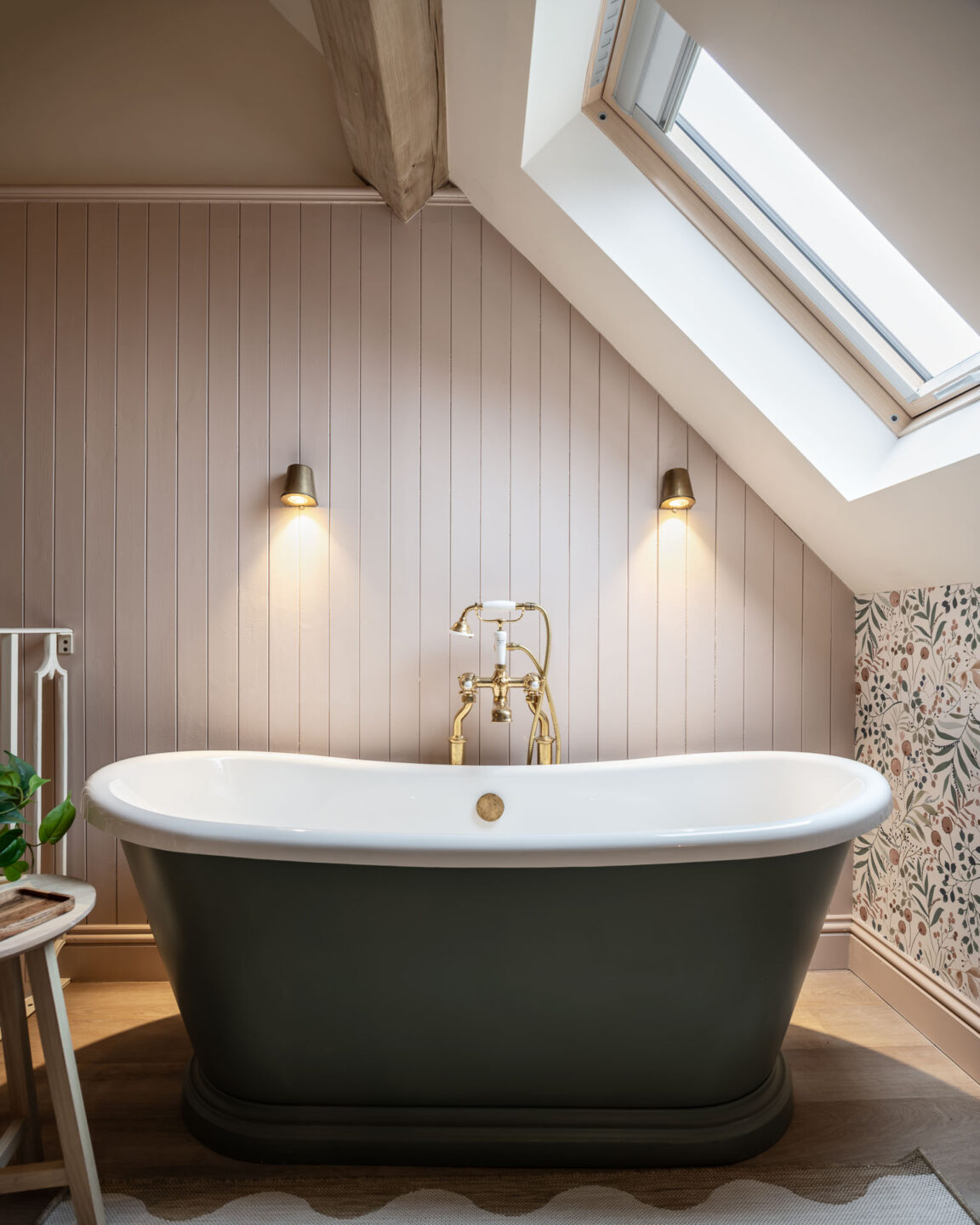
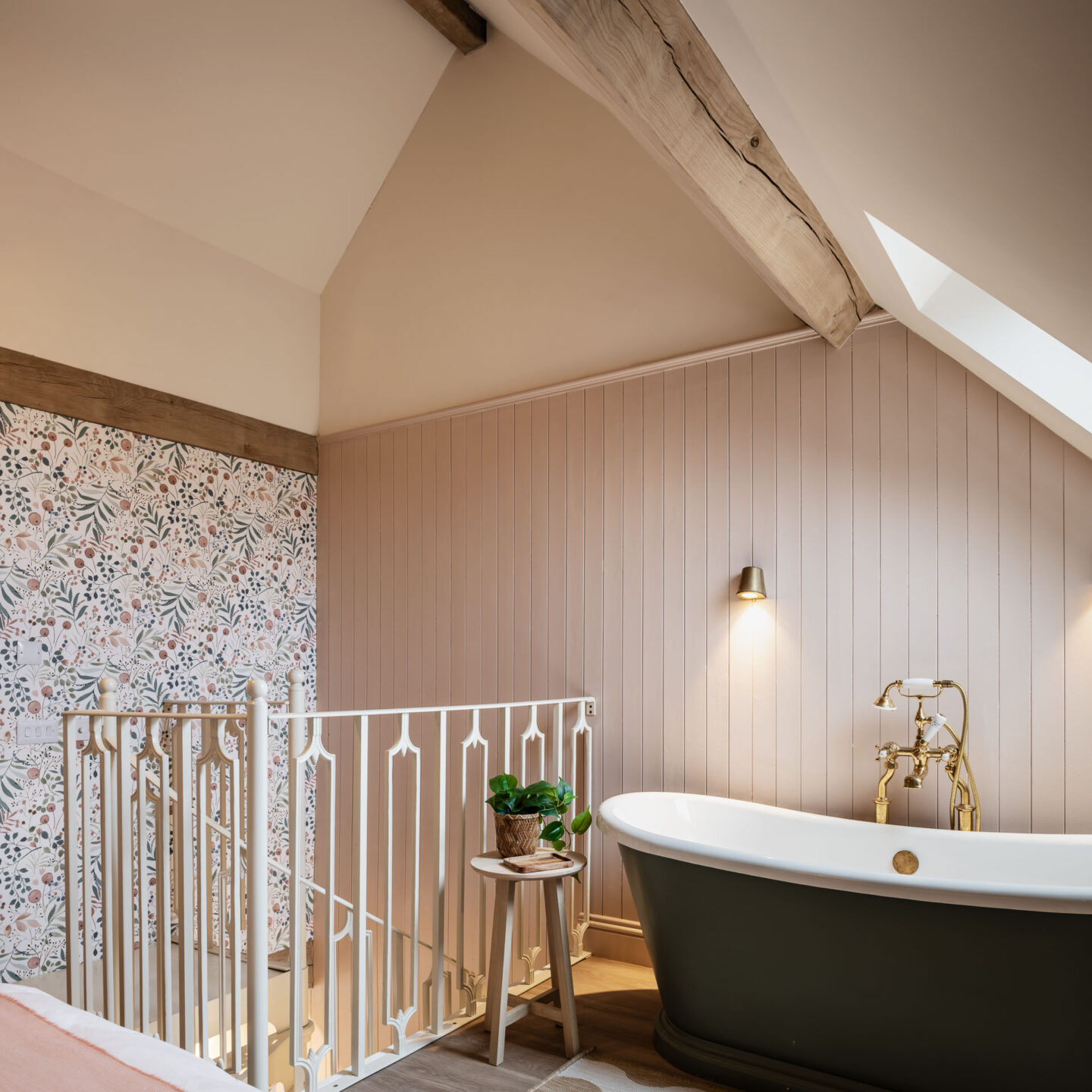
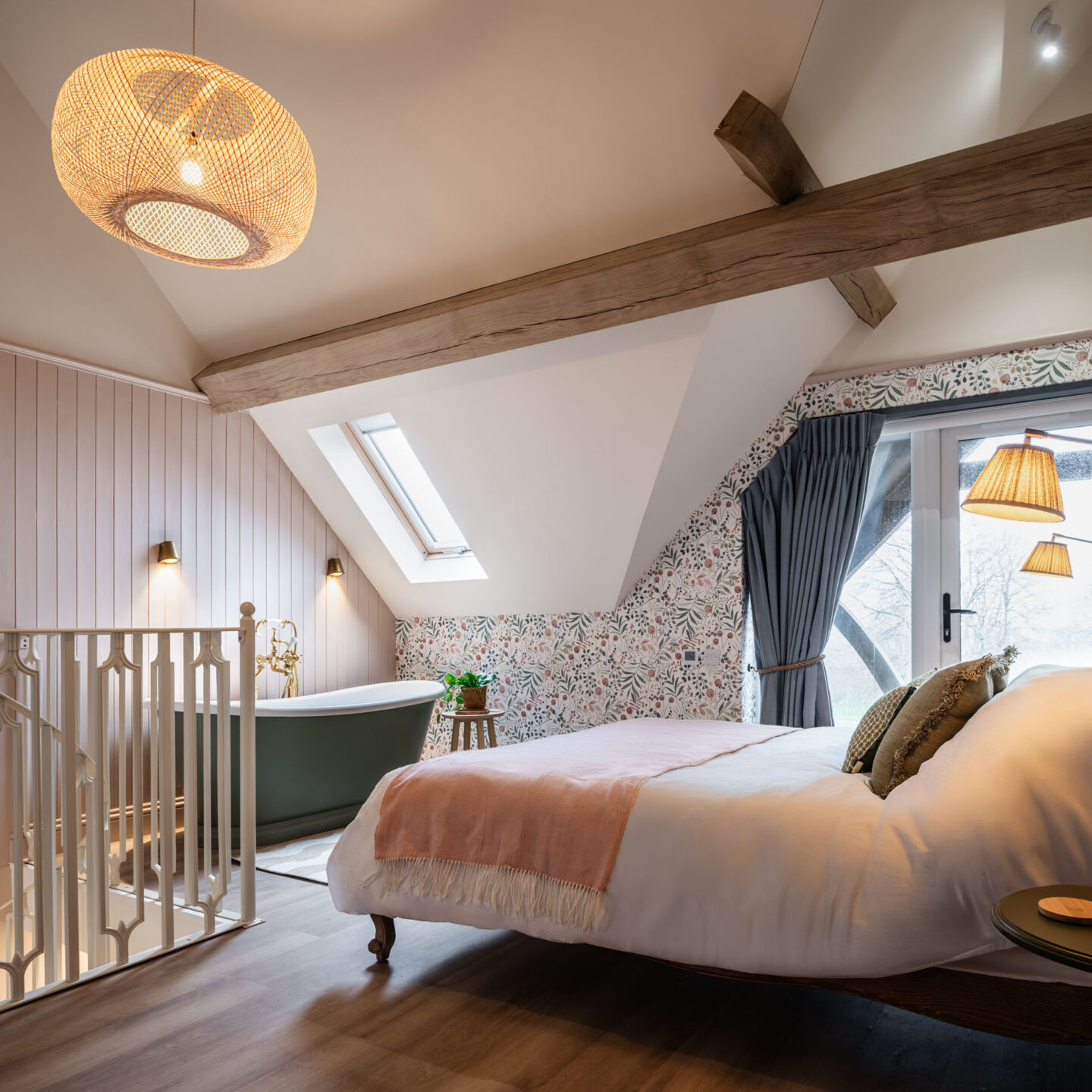
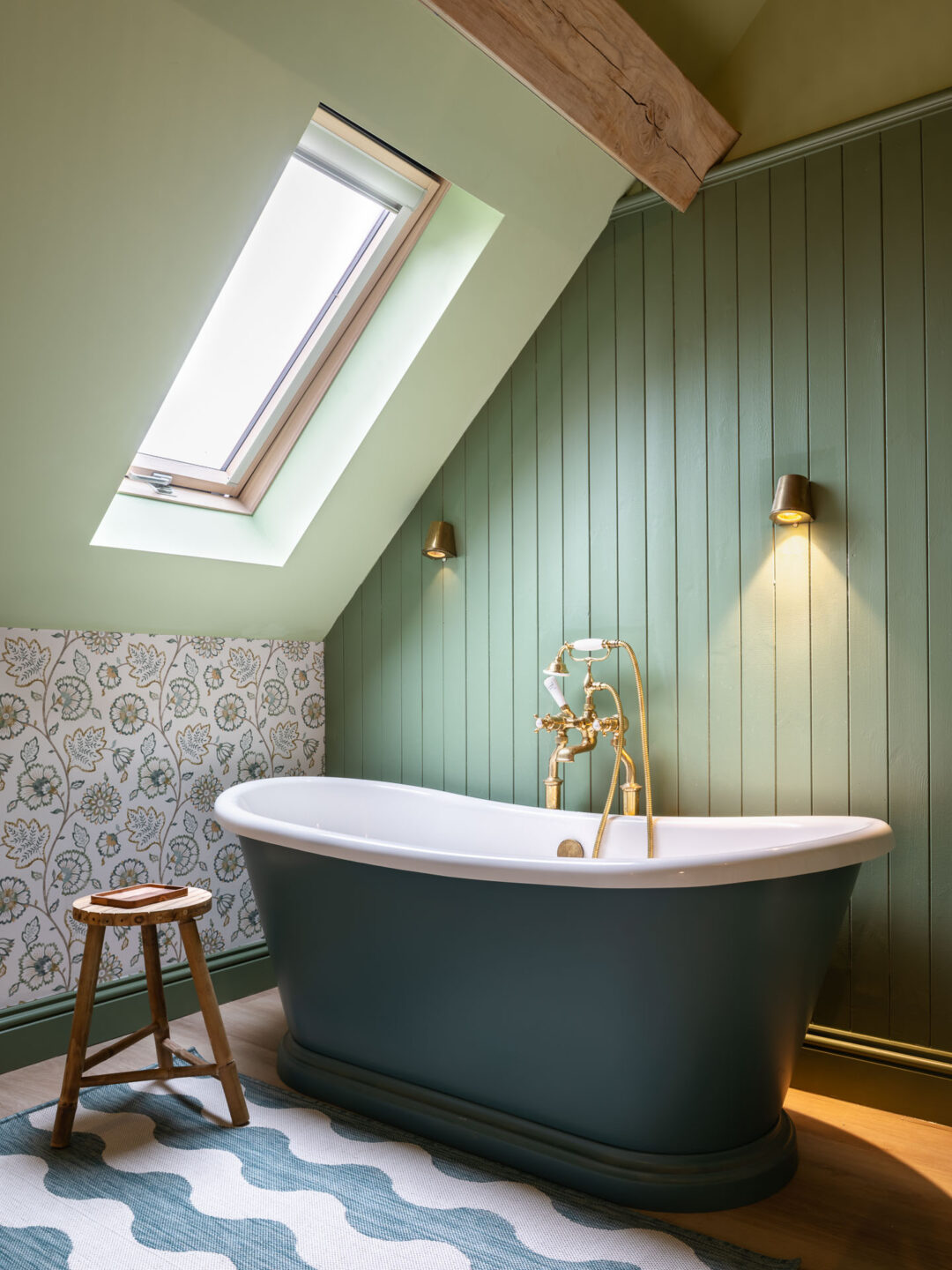
‘We really wanted to put a bath on the balcony so guests could enjoy the experience of being outside and connected with nature,’ says Emily. ‘This meant the oak frame needed to be strong enough to support four baths and be protected from the elements.’
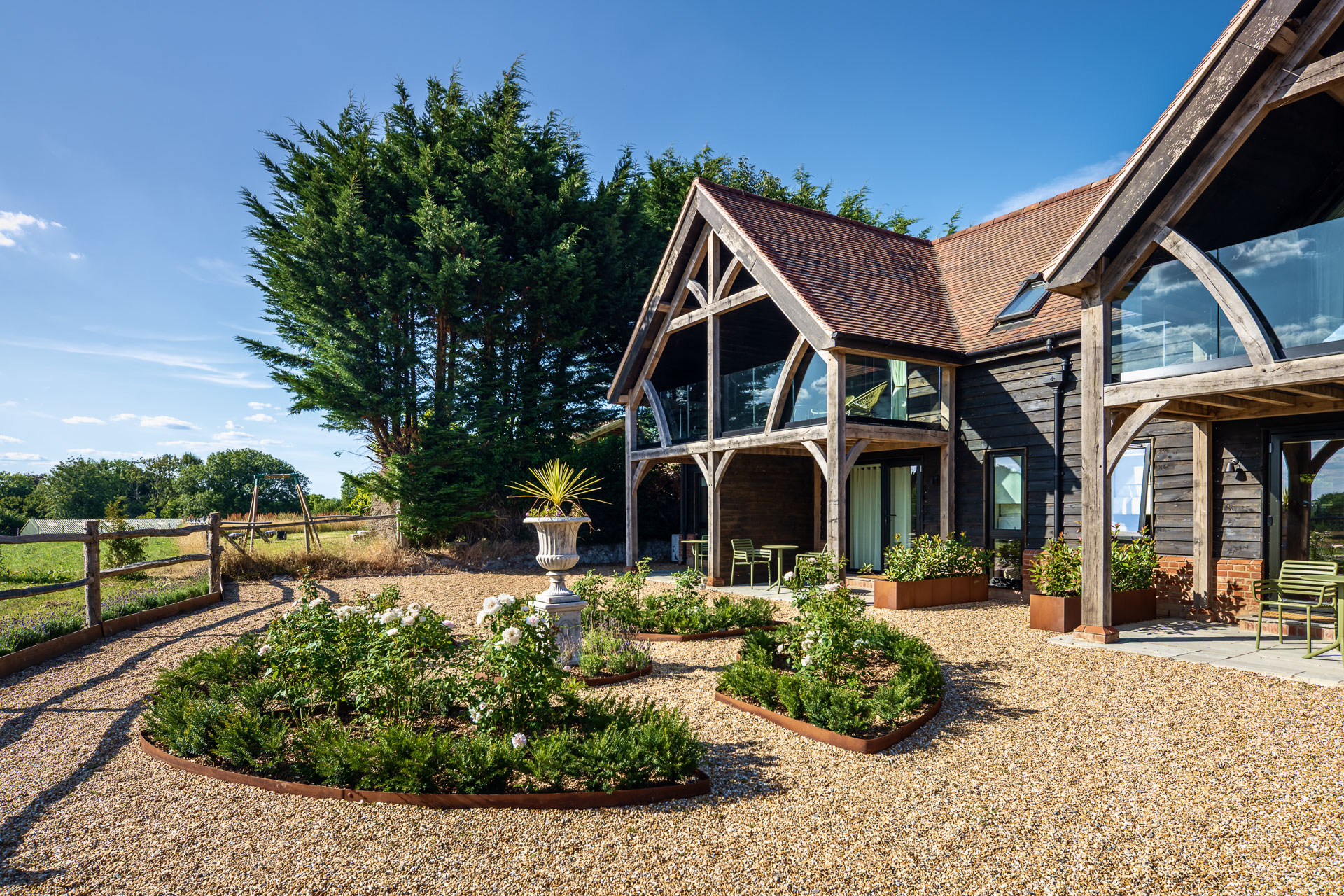
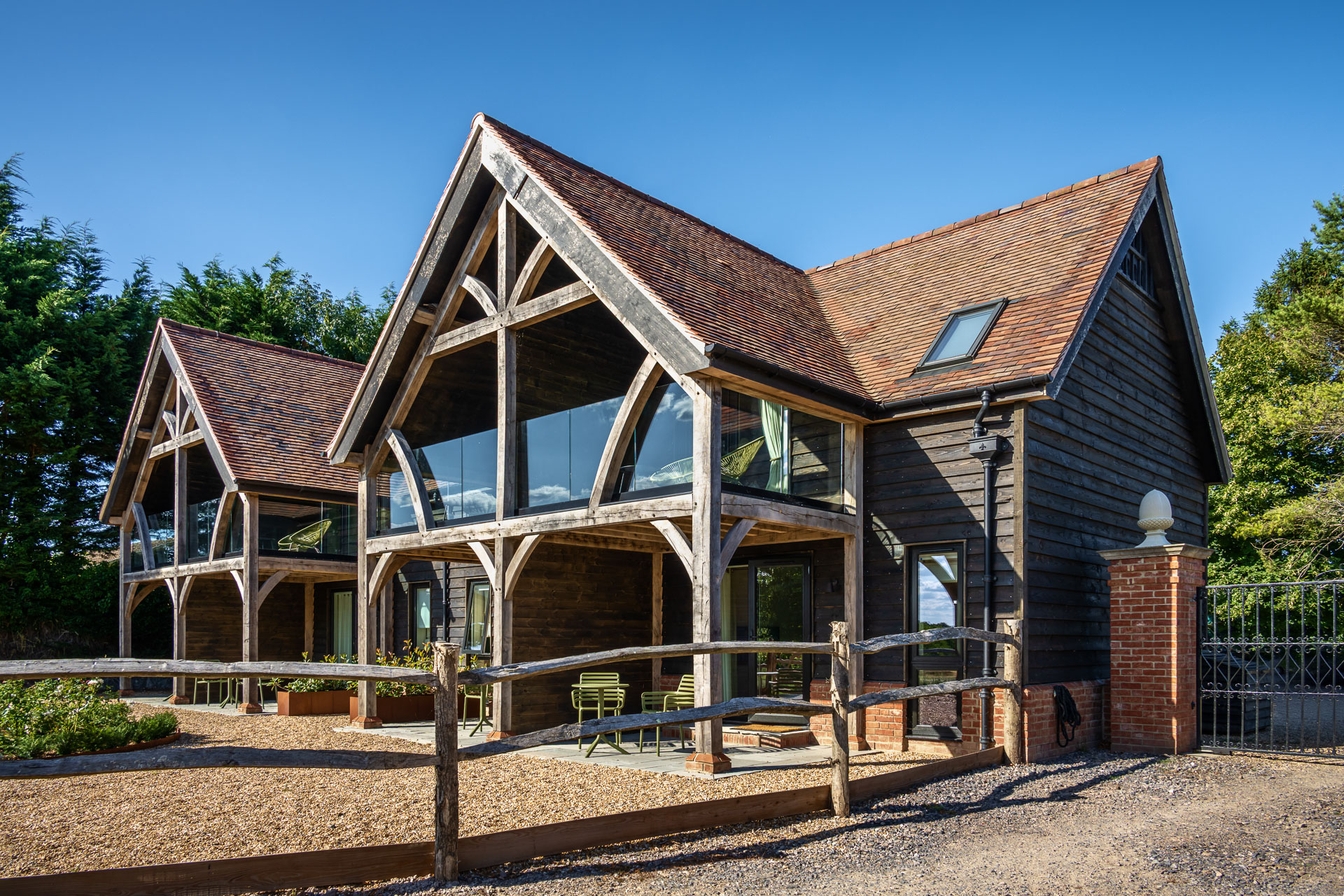
The request inspired the two large gables at the back of the building, both split into two to allocate a balcony to each property. The design creates covered terraces below, echoing the aesthetics of the nearby terraced cottages where the roof overhang forms a long front veranda.
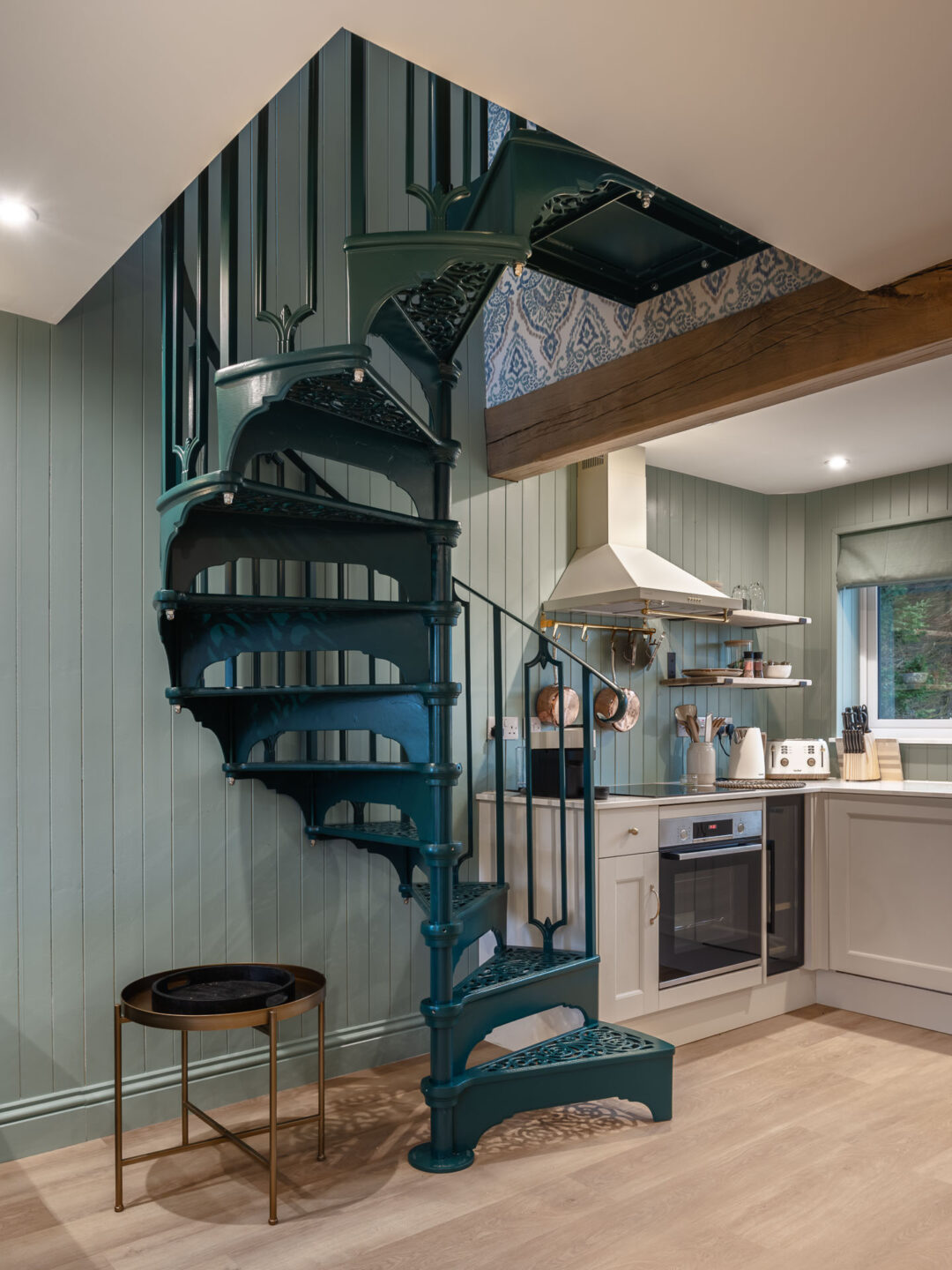
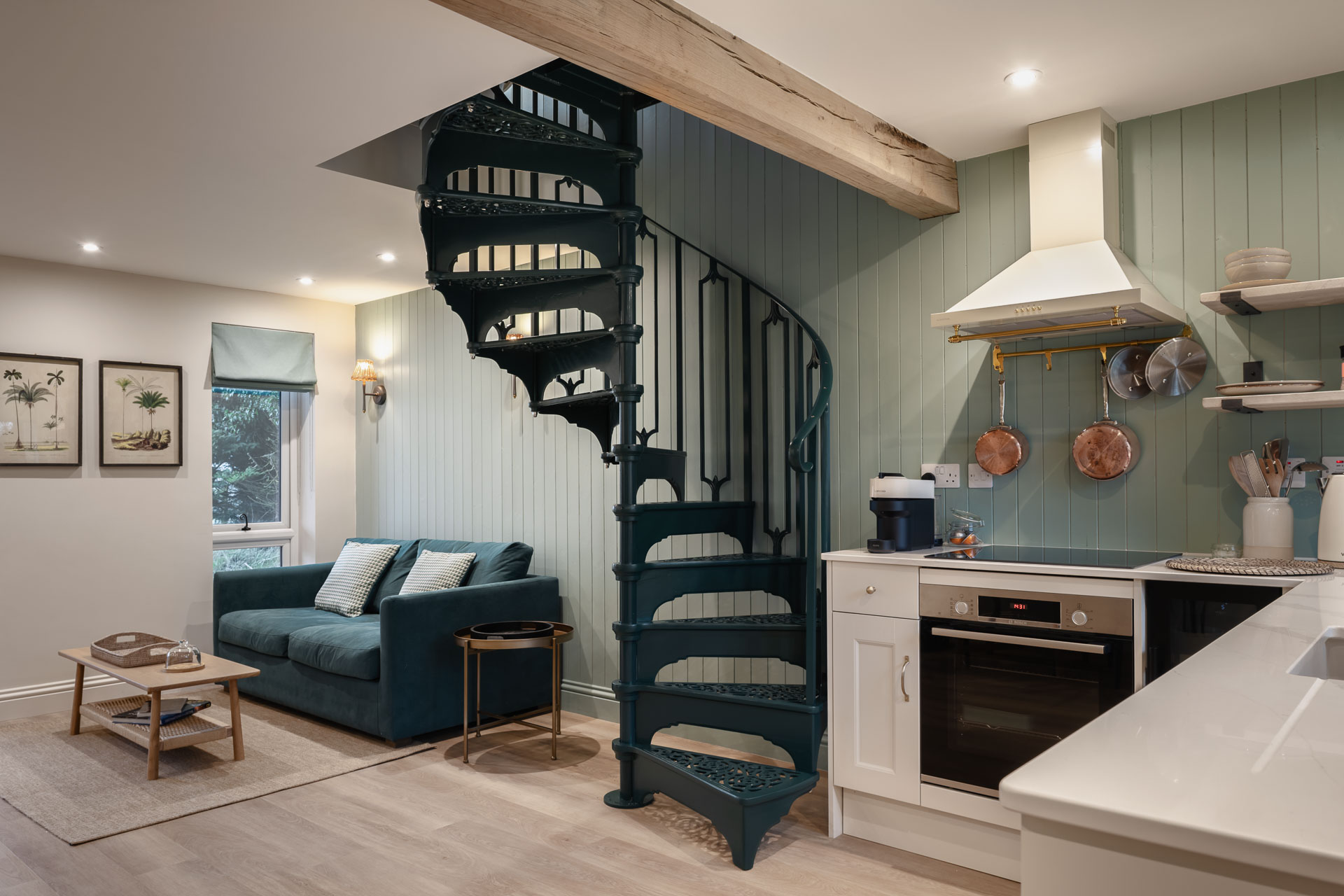
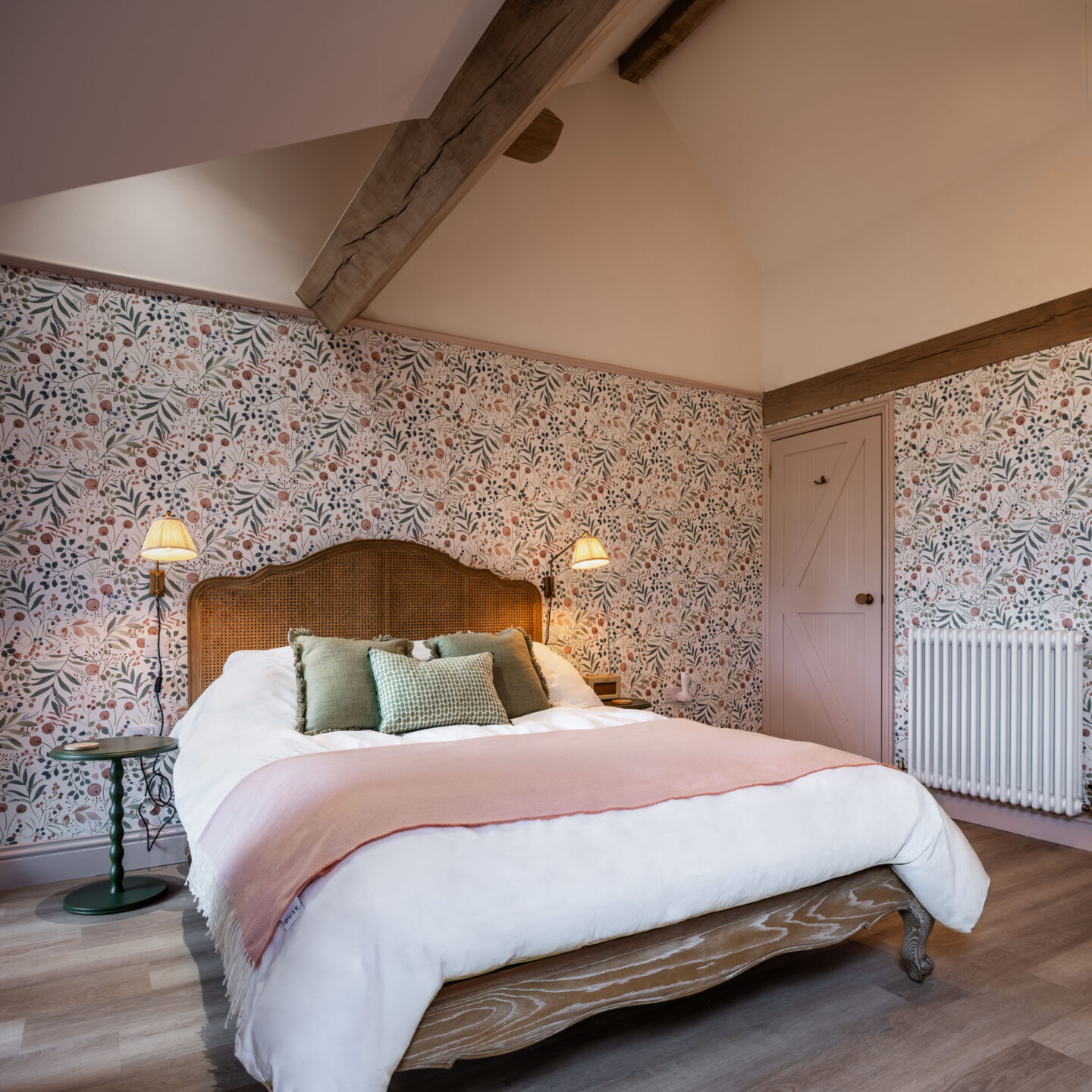
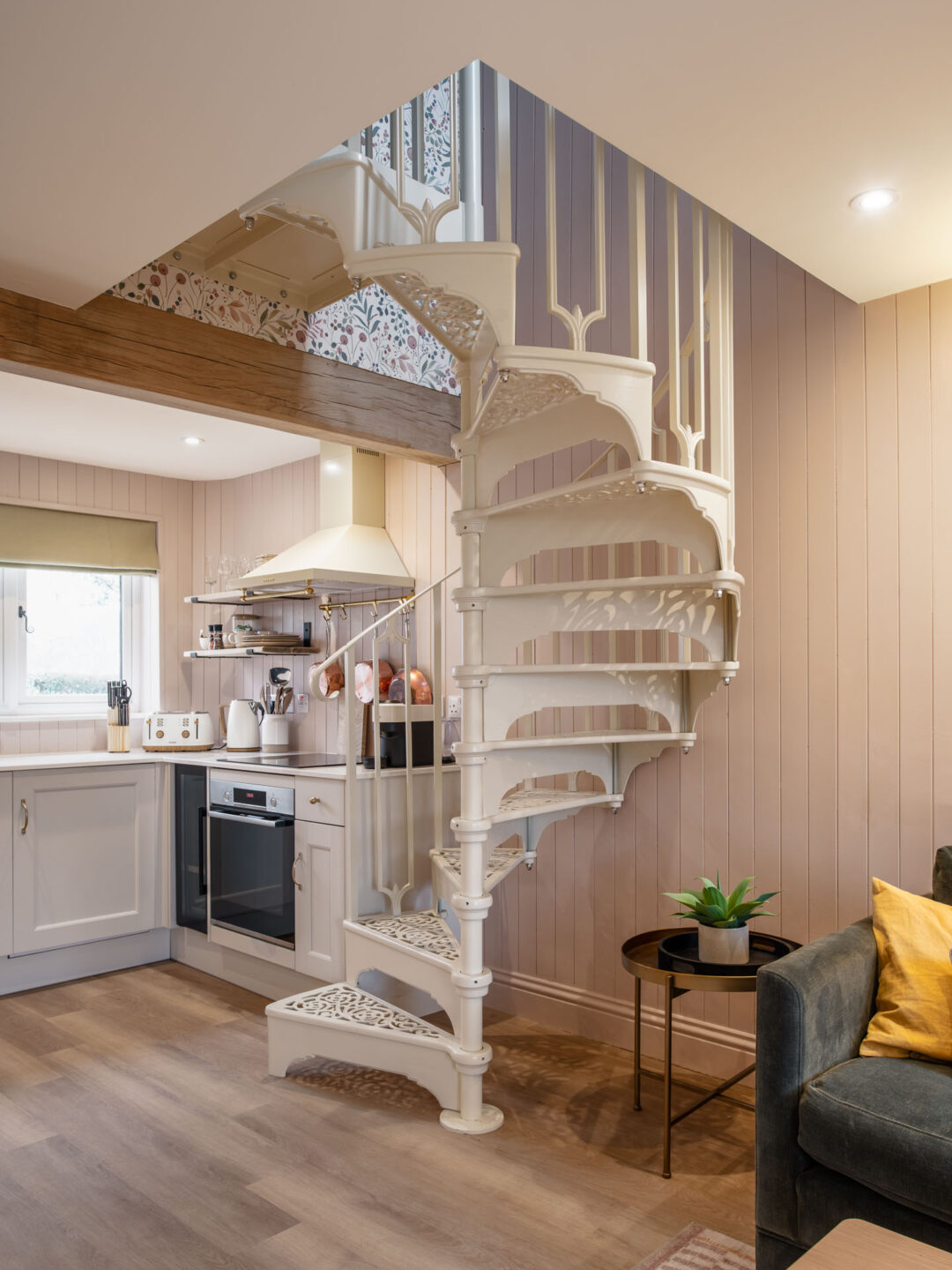
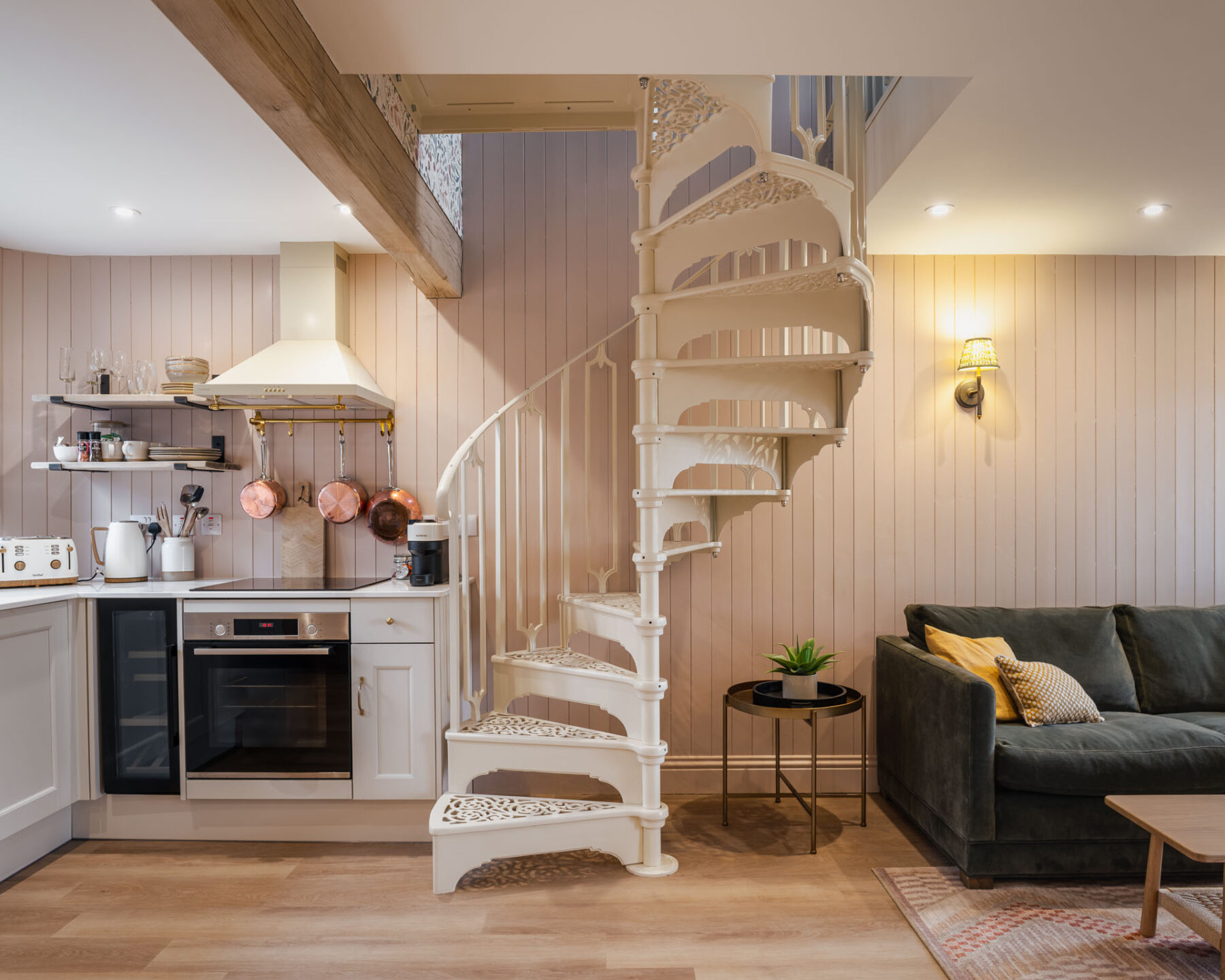
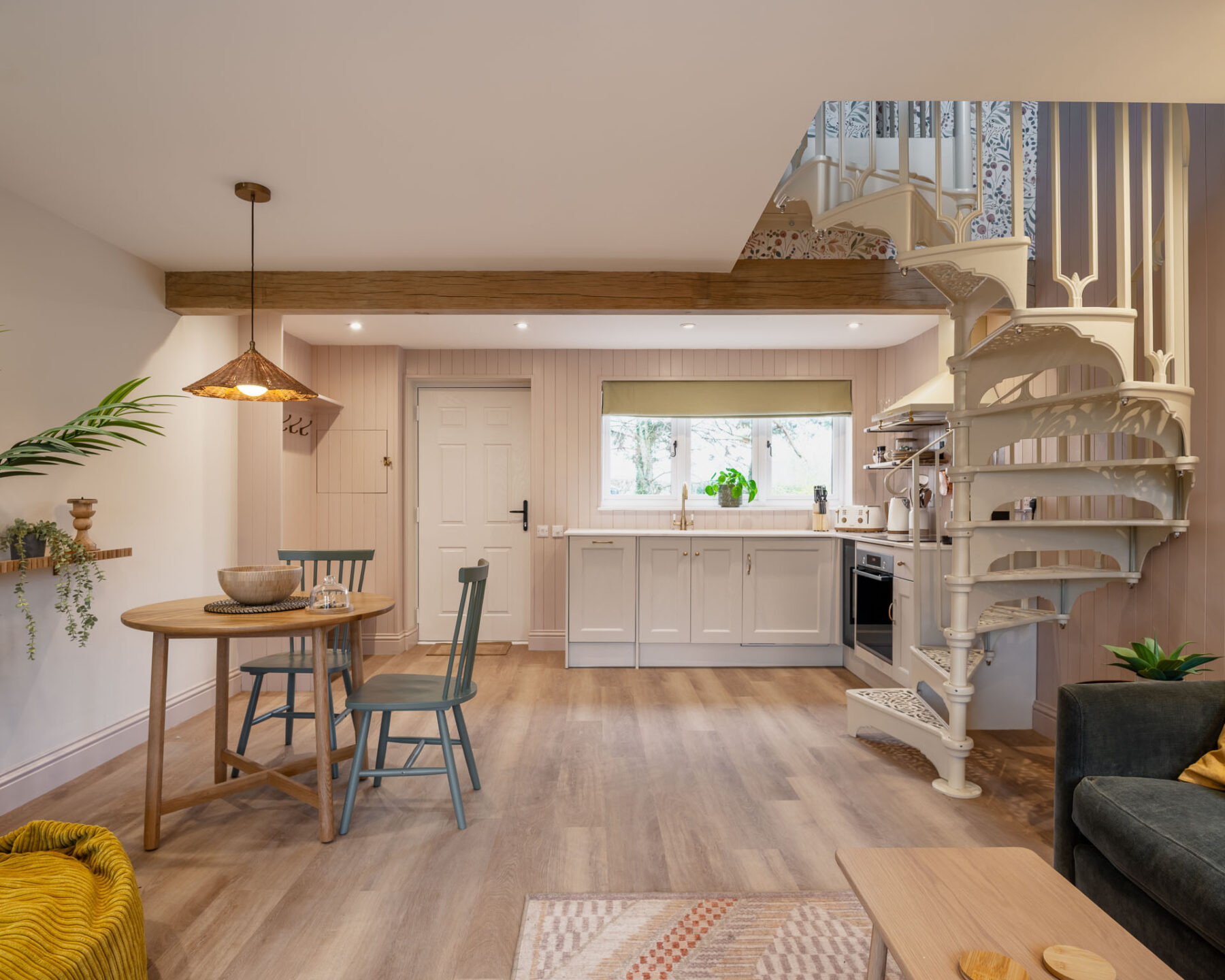
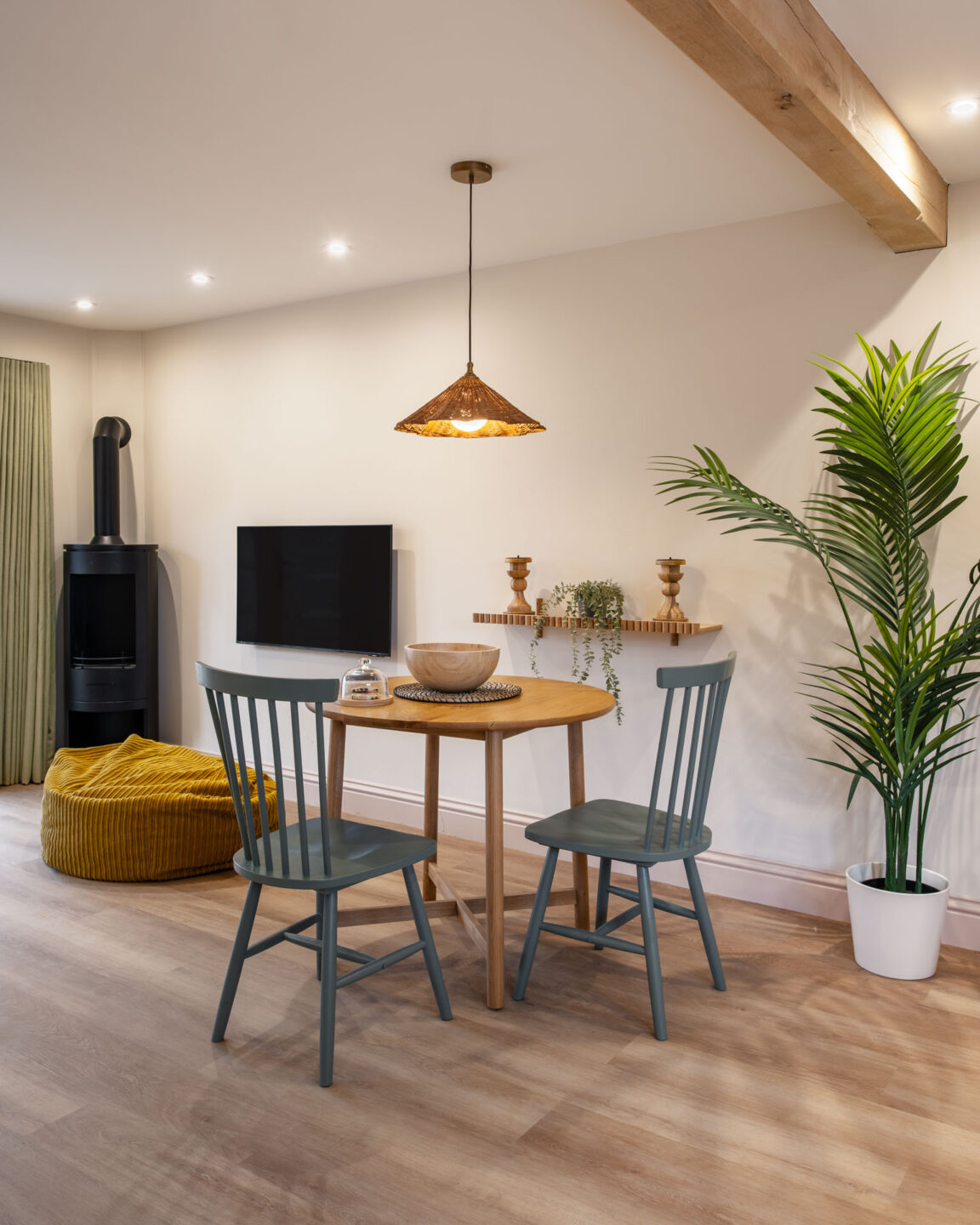
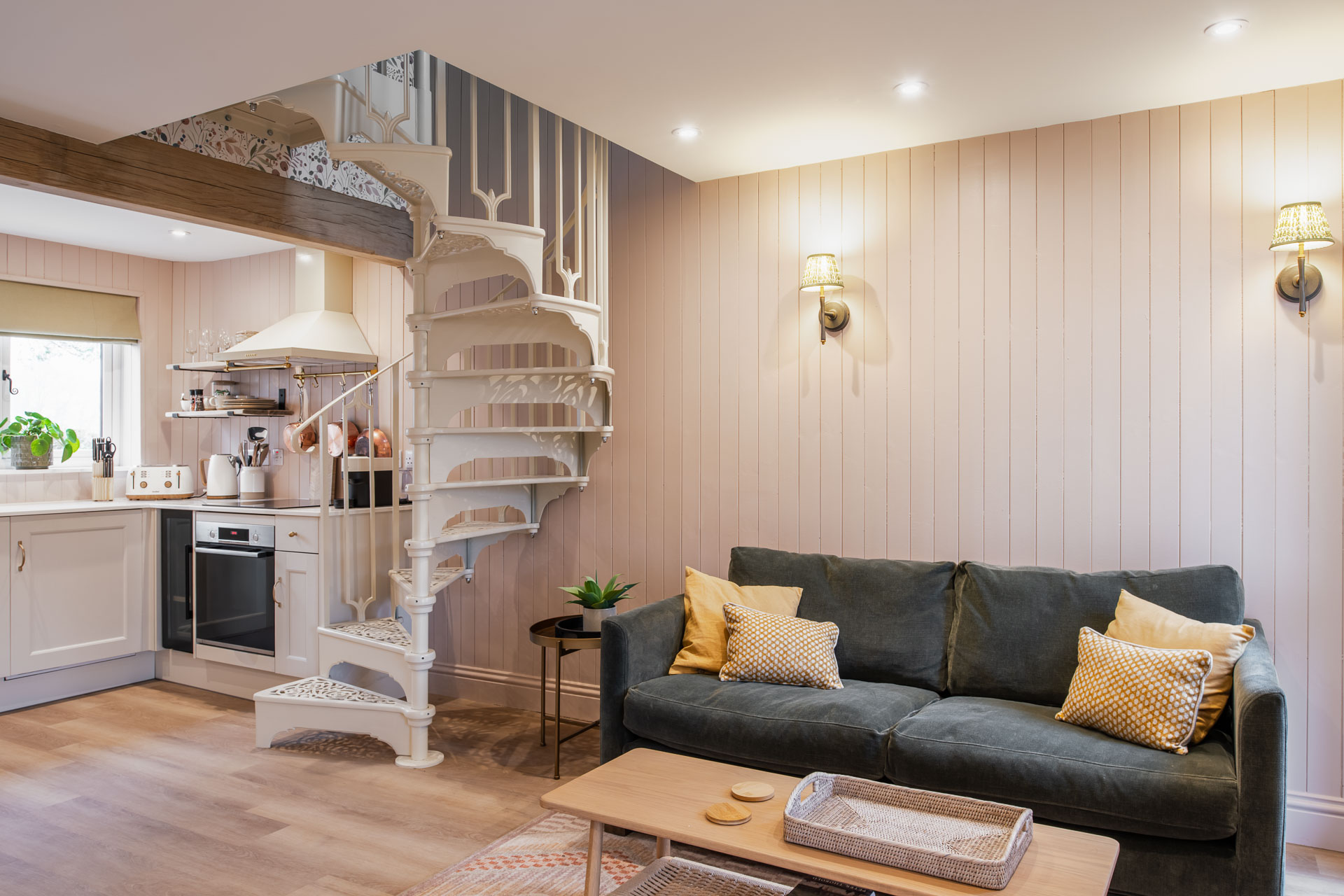
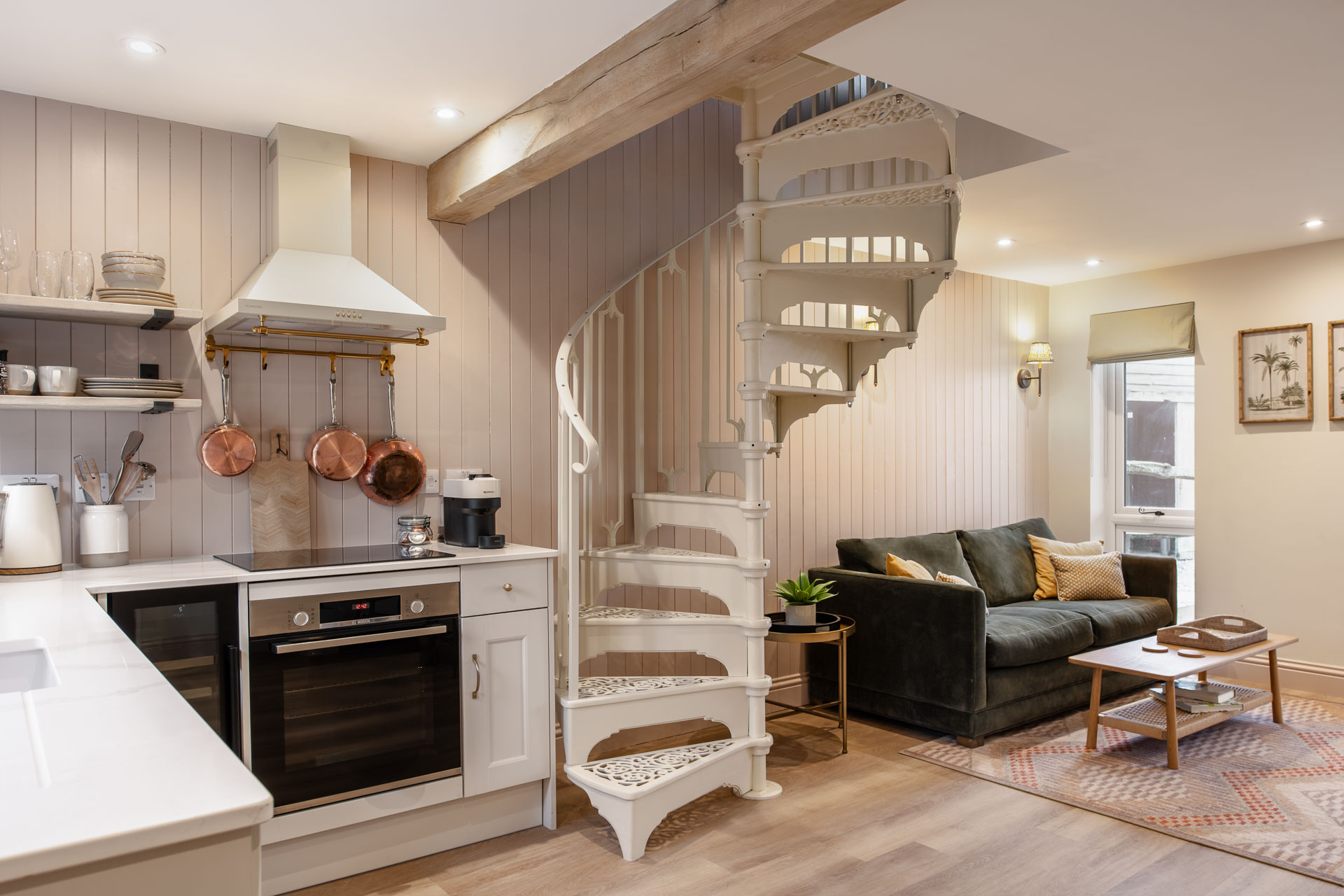
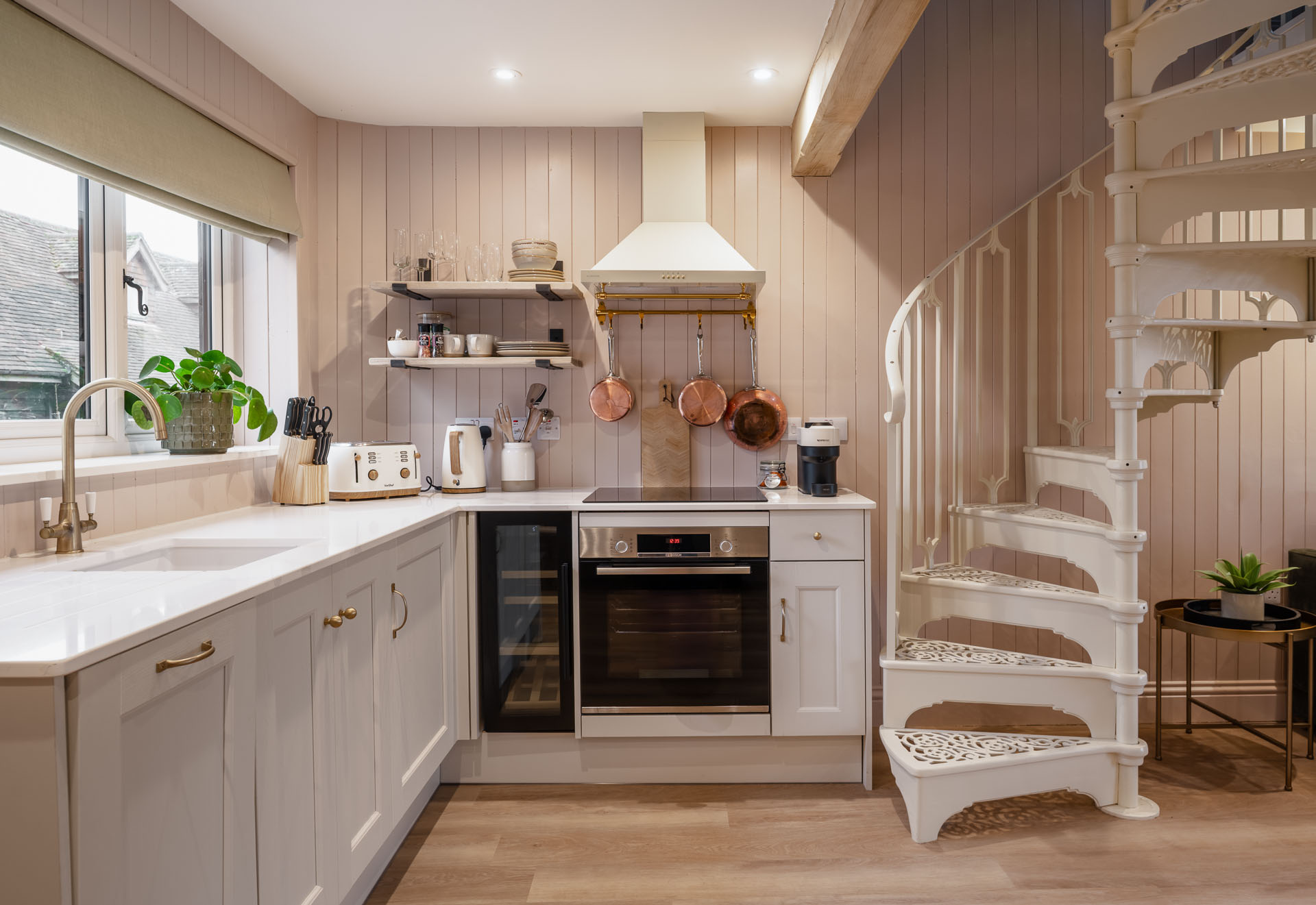
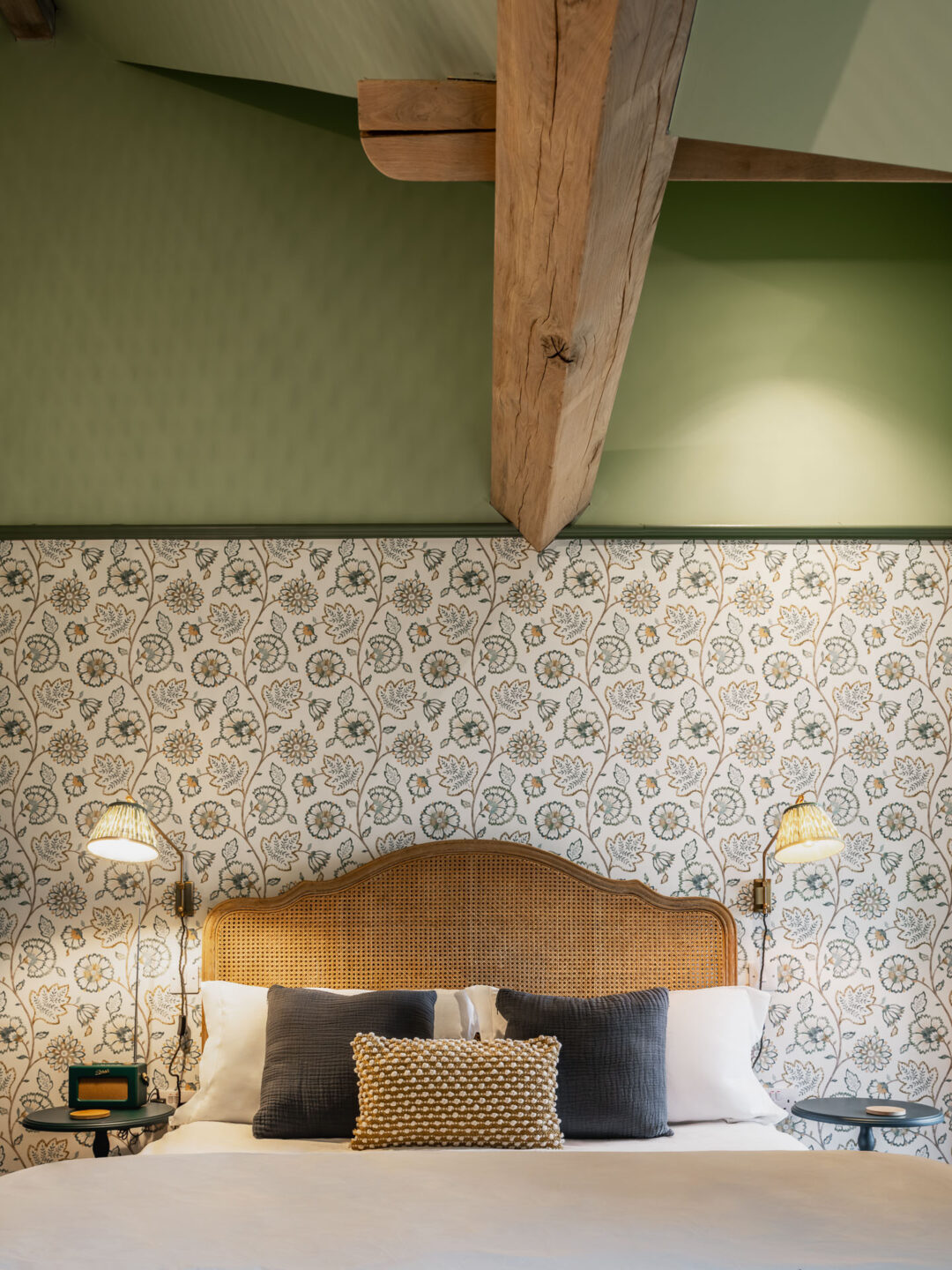
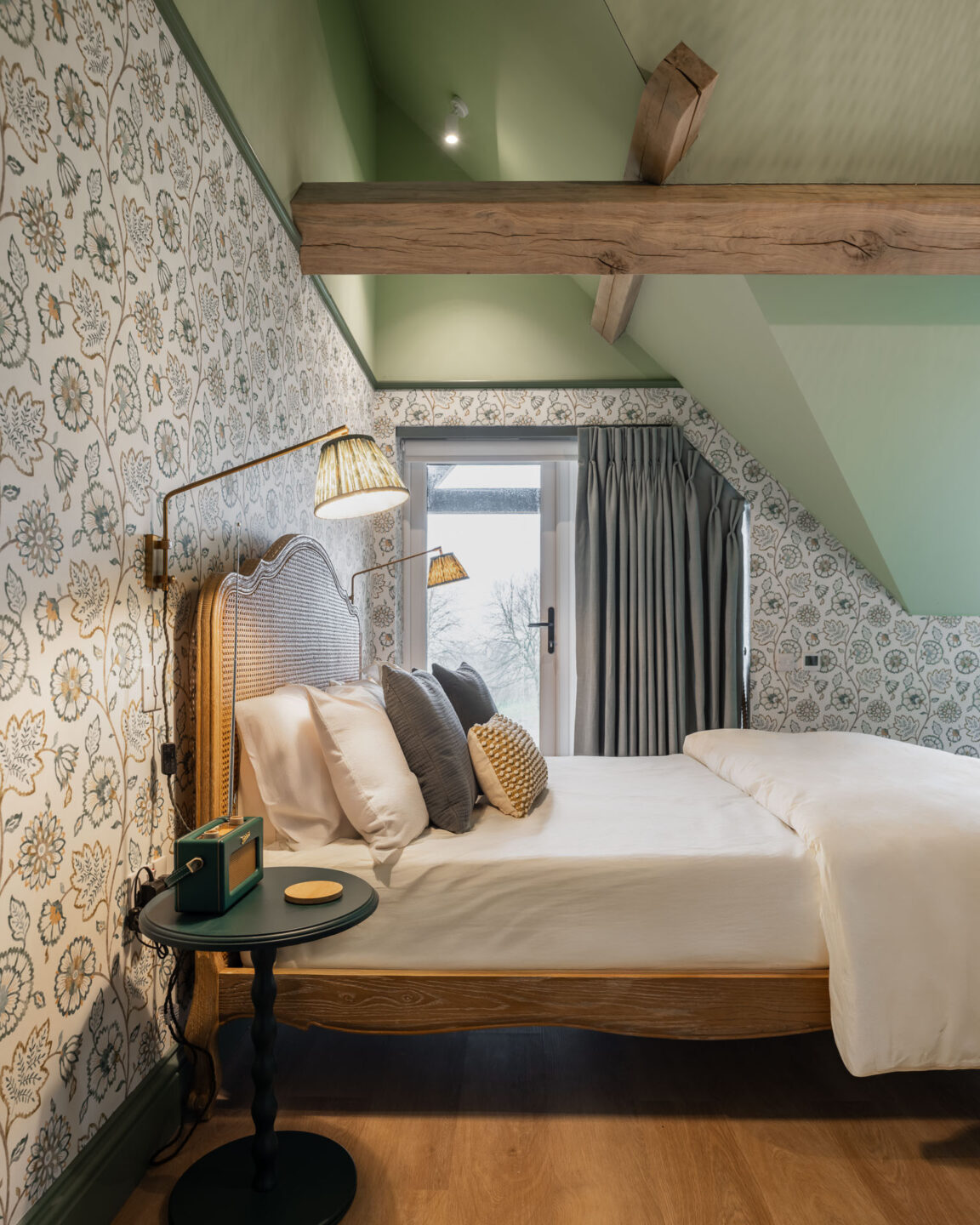
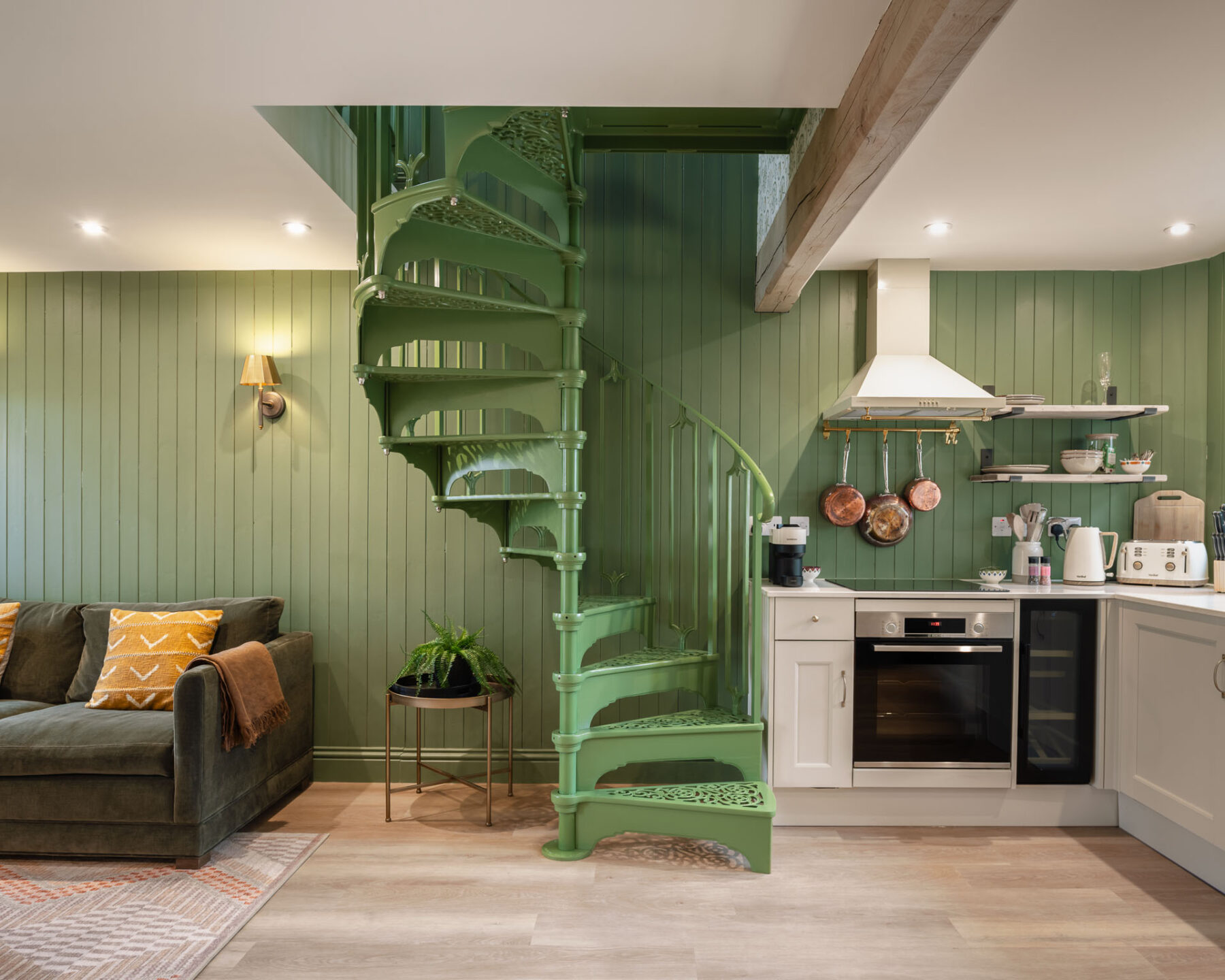
‘We wanted as much oak on show as possible balanced with what we could afford with our budget,’ Emily adds. ‘We’ve mirrored the reclaimed clay tiles and timber cladding in buildings around the farm and have lots of lovely oak on the outside. Inside, there are a few simple beams and that’s all we need. They’re modest properties – mini houses really – and we didn’t want the oak to feel overbearing. In many ways having less oak means you notice it more.’
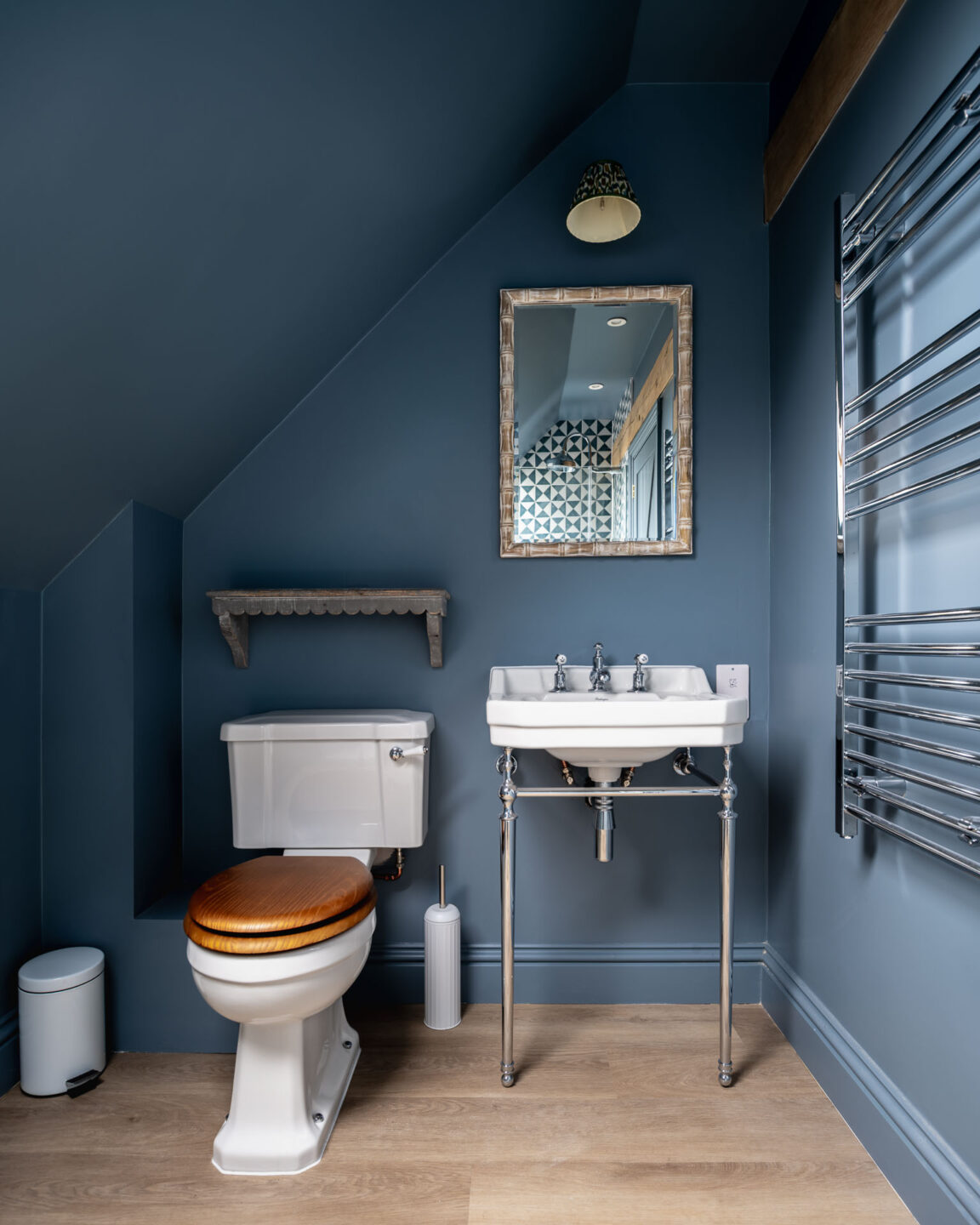
Welsh Oak Frame’s design team responded with a design the couple liked almost straightaway. After a few tweaks, such as moving the WC upstairs, they submitted their planning application, which was successfully approved.
‘All credit to Welsh Oak Frame for our wonderful design,’ says Andrew. ‘They were also really helpful once we started building as we’d never built before.’
Andrew got stuck into the build, hiring trades but doing the groundworks with his brother-in-law’s company. When the frame arrived the following month, they were ready.
‘The frame went up as one shell with the roof trusses and they fitted internal walls made of softwood timber and infill panels to segment the four properties,’ Andrew explains. ‘There’s added value to the design because the building is flexible enough to be converted into one large house – or two houses – in the future.’
The build took around a year to complete. By this time, Andrew and Emily had reluctantly changed their mind about having a bath on each balcony.
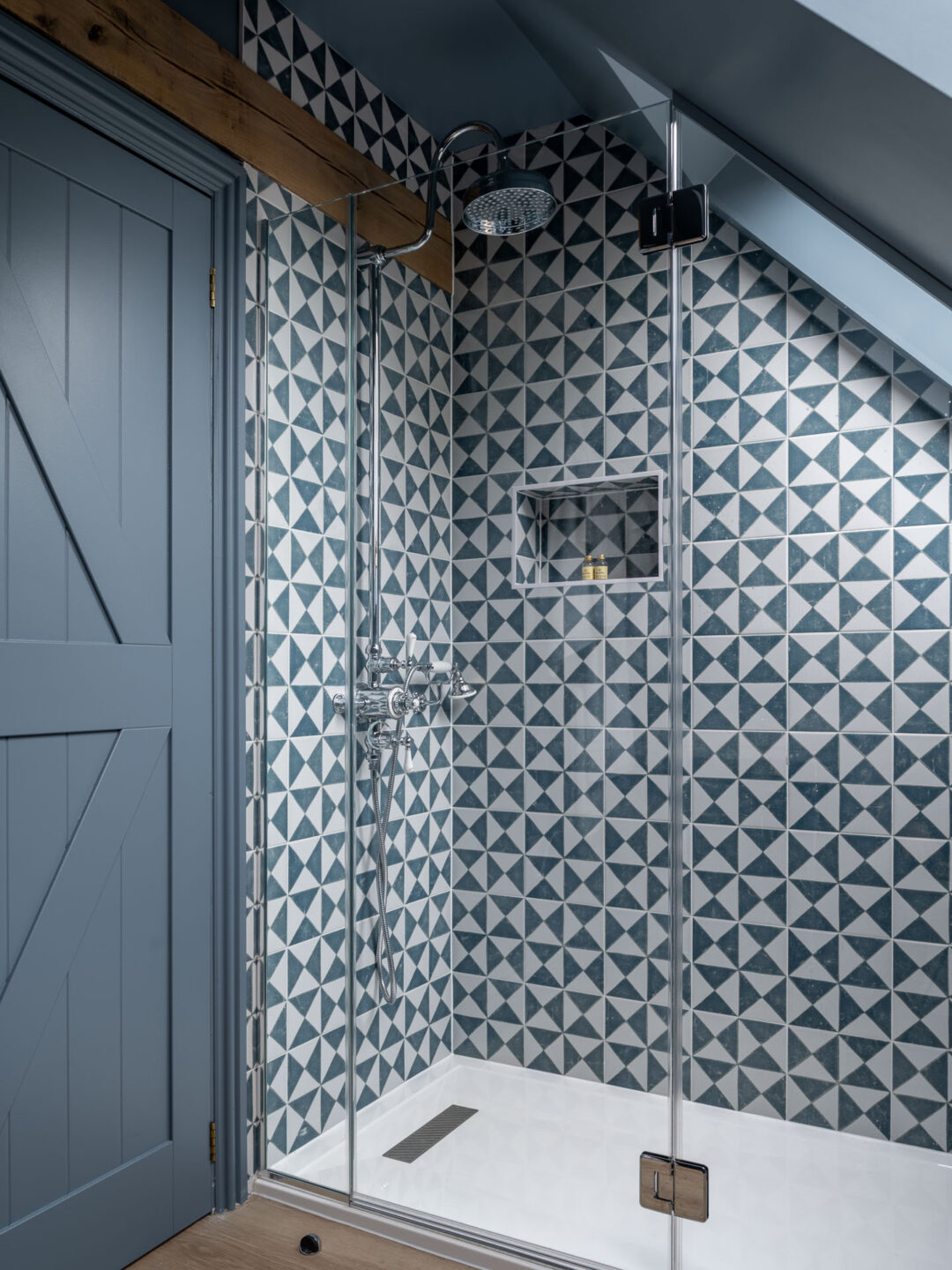
‘It was a hard decision as we really loved the concept but it just wasn’t practical for privacy reasons,’ says Andrew. ‘However, moving each bath inside to the bedroom re-classified the space as a bathroom so to comply with building regs I had to fit extractor fans.’
Now finished, and with pristine interiors, the four properties are an inviting destination for a weekend escape to the countryside. Andrew and Emily have been growing Chardonnay, Pinot Noir and Pinot Meunier grapes – the three variations that go into making champagne-style sparkling wine. Their first vintage will be released in summer 2026.
‘We get great reviews from guests staying at the oak frame houses and it won’t be long before we can offer them tours and picnics in the vineyard,’ says Andrew. ‘Staying here, surrounded by natural oak and enjoying views from the balcony, has created a lovely ambience to unwind. The properties are a great selling point for our vineyard as being present and connected with nature is what we’re about.’
Book your stay in an oak frame house at the Otium Wine Estate: otiumwineestate.com/stay-with-us