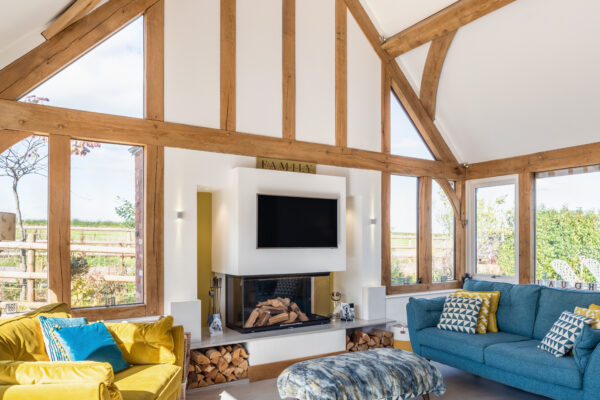

Biophilic Design
Biophilic design improves our connection with nature where we live and work to enhance our health and wellbeing. Consider the principles and how they might be applied to your own project to add another layer of comfort and enjoyment in your new home.
What is Biophilic design?
Biophilia is the deep-rooted affinity we humans have with nature, arising from our ancestors’ connection with the natural world through farming and living on the land. With increased urbanisation of our towns and cities, in today’s world we’re becoming less connected with nature. This can have a negative impact on our mental and physical wellbeing.
How can Biophilic design help?
Connecting with nature is at the heart of Biophilic design, inspired by views, air circulation, changes in light, temperature and seasons. It also means creating comfortable living spaces by considering the size, flow and layout of rooms, and bringing natural materials, textures and colours into the home through decoration. This brings improved comfort, enjoyment and security to our surroundings.
The principles:
– Build with authentic materials
– Create a quiet space
– Connect with outside
– Orientate rooms with care
– Harness natural light in dark or difficult places
– Balance heat and cooling
– Plan acoustic comfort
– Decorate with natural materials and plants
Build with authentic materials
Oak is a perfect example of how natural materials can enhance how you feel about living in your home. Vaulted ceilings command a sense of space. Exposed trusses, posts and beams show-off the artisans’ workmanship and display oak in its most natural state. Many of our customers enthuse about the joy that comes from running their hands across the grain of the timbers, which is unique to their home.
Create a quiet space
Carving out even a small area with no technology, where you can retreat and read, perhaps, is essential for rest and recuperation away from the chaos of daily life. Whether you are building a new home or extending your existing home, we can easily incorporate a room into the design where you can escape and relax.
Connect with outside
Indoor-outdoor living is an obvious solution and creating that seamless blur can easily be done with bi-folding or sliding doors, and carrying the same floor tiles out onto a terrace. This connection is especially important in winter when the doors have to be shut – frameless designs, or frames with a narrow profile, maximise the visual connection even on the dullest days.
Orientate rooms with care
There’s no doubt that large windows, doors or even floor-to-ceiling glazing are a must on a south-facing elevation and for this best light to be enjoyed by the main living spaces. This is why it’s common for bathrooms to be placed on the darker, north façade. Connect a room like this vertically to the sky. A flat roof window above a shower gives the impression of showering outside; while a bath beneath a sloping roof window can feel like bathing beneath the stars in the evening.
Harness natural light in dark or difficult places
A privacy/light clash can be an issue on some elevations. In a bathroom, a vertical, slit window offers a glimpse of greenery in the garden. Or to a strategically planted tree, without sacrificing privacy. A kitchen, along a neighbouring wall, can have high-level horizontal strip glazing. Draw natural light down into a dark stairwell with a roof light at the top. Consider fitting a sun-pipe to bring light into a window-less utility or bathroom. Switching to daylight bulbs, which mimic natural light, will also improve everyday comfort.
Balance heating and cooling
Glazed south-facing elevations, though beautifully bright, can make rooms uncomfortably hot during summer and need the shade from deep eaves or an awning. A highly insulated house is essential in winter to keep energy bills low, but needs good ventilation to avoid becoming damp. In airtight houses, a mechanical ventilation heat recovery system draws fresh air into the home. Underfloor heating is more comfortable than radiators because it provides a steady radiant heat with no hot and cold spots.
Plan acoustic comfort
Internal walls built with a layer of sound insulation isolate noise from different activities in different rooms, removing repetitive and annoying noise pollution.
Decorate with natural materials and plants
Wood, stone, cotton, linen are just some of the natural materials with tactile textures to use around the house. Take inspiration from the garden or countryside to find the most restful colour schemes. When you furnish, buy pot plants with health benefits like a snake plant. These convert carbon dioxide into oxygen, aloe vera to soothe the skin, and spider plants for removing air toxins.
For more information:
www.biophilicdesigns.co.uk
www.oliverheath.com