What is green oak, air-dried oak and kiln-dried oak? Which should I use?
What is green oak timber?
Green oak timber is cut from trees felled within 18 months. It has a moisture content of 60-80%, which gradually decreases as the oak dries out. This process is called seasoning and begins straight away. ‘Green’ oak wood refers to how fresh the oak is rather than its colouring.
What is air dried oak?
Air-dried oak are timbers cut to size and stored outside away from the elements to dry naturally. Air circulates between the timbers, gradually reducing the moisture content. On average 25mm of oak dries per year. Seasoning can take anything between three to ten years depending on the thickness of the oak. The moisture content of air-dried oak is around 20-30% or more.
What is kiln dried oak?
Kiln-dried oak has a similar moisture content to air dried oak (although in neither case is the moisture ever completely eliminated) but the drying process is accelerated inside the kiln.
What are the differences between green oak, air dried oak and kiln dried oak?
Green oak’s high moisture content allows the timbers to move when they’re first fitted. Over time they season and settle down, improving the structural integrity of a building as well as enhancing the character of the building. Green oak will eventually reach the moisture levels of air-dried oak.
Air-dried and kiln-dried oak have a low moisture content that makes them more predictable and less likely to move.
Green oak timber is cut to order while air-and kiln-dried oak is cut before drying. This could mean size restrictions when it’s time to buy – and potentially more wastage.
Green oak, air dried oak and kiln dried oak. Which type of oak to use and when
Green oak is the only way forward when it comes to oak frames, roof trusses, beams and posts. The soft wood is easier to cut and shape to exact sizes. More importantly, as the green oak starts to dry, it shrinks slightly – mostly across the width of the grain. The tightening the joints and hardening to improve the overall strength of the oak frame. A reputable oak frame designer will allow for this shrinkage in the design detail.
Air-dried oak has already dried a little and developed the cracks and splits that occur during the drying out process. It works well if movement needs to be minimal and when thicknesses of 75mm or less are required – for example, lintels, glazed panels and window frames. Air-dried oak can also be suitable for renovation and restoration projects where the oak ties into an existing frame or original brickwork. It isn’t usually recommended for oak-framing where timbers need to be 100mm thick or more.
The speed at which kiln-dried oak is achieved can cause instability if the drying procedure isn’t uniform, causing stresses in the wood and damaging its structure. It’s also an expensive process in time, energy and rejected timbers. Along with air-dried oak, it is mainly used for flooring, fireplace mantels, garden sleepers and furniture.
What happens to green oak over time?
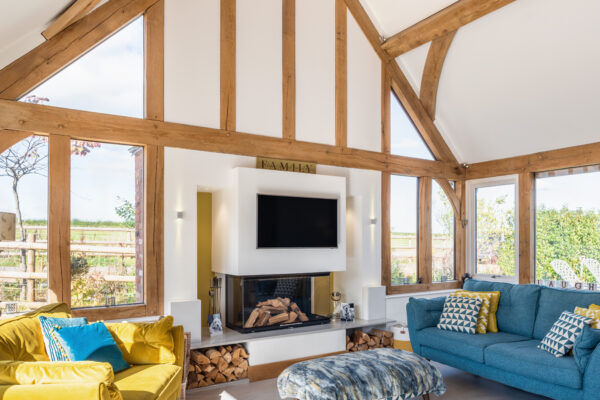
Green oak wood weathers to a silvery grey outside and inside the oak begins to split and age as the timbers dry out. This aged appearance is all part of the charm of living inside an oak-framed house and, quite simply, makes each building completely unique.